Never stop writing

Aeroflot/Аэрофло́т to Lima
About a noisy, chaotic, and unforgettable 21-hour Aeroflot journey from Luxembourg to Lima in January 1989, with Russian flight attendants, chicken and peas, freezing Gander, Havana, the Andes, and the beginning of our Latin American adventure.
STORIES
Sanjeewa Liyanage
5/24/20205 min read
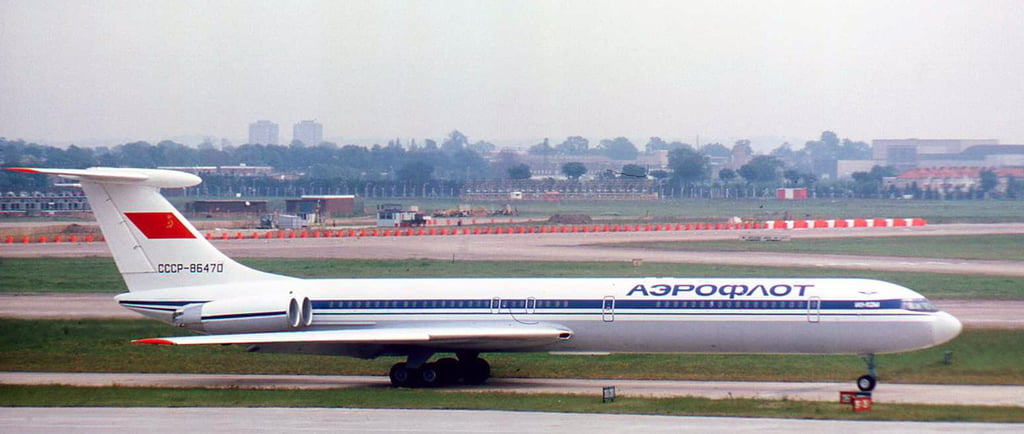
We were all moved from Paris to a tiny town called Luxembourg on 14 January 1989. Asians, Africans, and those who were at the International Office arrived in Luxembourg and were joined by Europeans. We were to embark on the longest flight we had ever taken. We later learned that there were more than 20 of us travelling, so we had received a special group discount on this flight. And it was also my first time travelling on the flag carrier of the USSR, Аэрофло́т, or in English, Aeroflot.
The flight had a lot of empty seats. The flight attendants were huge Russian middle-aged women wearing ocean-blue uniforms. The seats were blue too. We settled into our designated seats and soon realized this was not an ordinary flight.
Some of the window seats were vacant, and for most of us, we liked to see the outside through the windows, especially when taking off. We had no understanding in those days about flight balancing and why people are seated in a way to balance the flight. Father Joe Naliath was in the middle row of seats. He wanted to change his seat, and while the seat belt sign was still on, he stood up to move to another seat. Remember? There were plenty of empty seats.
Right then, one of the flight attendants saw JN, approached him, and ordered him to sit down. JN tried to explain, “There are empty seats, and I want to change my seat.”
“Sit down!”
There was no please or any sort of kindness in that voice. JN looked at the flight attendant, still standing, and he did not know what to do. He was possibly thinking, what is the logic behind preventing him from moving to another empty seat? Right then, the huge flight attendant put her strong hands on the tiny shoulders of JN and pushed him down forcefully, settling JN violently into his seat, and said firmly, “Sit down.”
JN was looking at the face of the flight attendant like a cat scared to hell. There was no mercy on her face. She then told him in a thick Russian accent, “Sit here! Put your seat belt now!” After we all witnessed this, we knew that changing seats was not going to be an easy affair.
The flight was speeding on the runway to take off. The whole flight was heavily vibrating, like it was going to fall apart, and the sound of the engines was so deafening that we could not hear what others were saying, even though they were yelling. I now know the aircraft we flew in was an IL62, or Ilyushin 62, manufactured in the 1960s. Quite surprisingly, some of these IL62s still fly, and it is listed as one of the worst passenger aircraft on some Internet sites. With all that roar and chaos, the flight took off. But the sound of the engines did not subside, and we had to endure that for the next 21 hours or so.
Our first stop was after less than a couple of hours at Shannon Airport in Ireland. We stayed on the flight while it was being refuelled, and a few passengers joined us as well. Then it was the second leg of the flight across the Atlantic. And we were served our first meal: chicken and peas. We were tired and slept.
After about seven or eight hours, we were descending onto a small airport in Gander in Newfoundland. The pilot muttered something in a thick Russian accent, and the only thing I could understand was “twenty-six.” We landed, and outside it was pitch dark except for the lights on the tarmac. Then we were asked to disembark.
Only when the door of the plane opened did we realize that the terminal building was about 200 meters away from the plane. Two hundred meters is no big deal for us, so we heroically descended the stairs onto the tarmac. Only then did we start feeling the cold from the top as well as from the bottom. The tarmac was icy, and we could not walk fast. We did not have proper winter shoes. Hey, we were heading towards a subtropical country. The cold air penetrated through our cheap and weak winter jackets.
JN had his scarf wound around his head and neck. His hands were stuck in his jacket pockets, as if the pockets were not deep enough and he was forcing his hands in a way to expand the size of the jacket pockets. It was such a sight to see him walking away like a child running away from the scary nanny, the Russian flight attendant. Vic, Joe Thomas, and I got through to the terminal building, which was a one-storey small building. Later, we came to understand that when the pilot said “twenty-six,” he meant the temperature, and it was -26 Celsius.
When we arrived at the terminal, we saw a clock with the local time and the words “Welcome to Canada.” We had touched down in Canada. But somewhere out of nowhere in Canada, in icy Gander. We were excited and snapped photos outside the clock and Canada sign. After about an hour, we took that painful dash in -26°C temperature towards our plane. Remember? We could not run. The tarmac was icy!
The flight took off with a thunderous roar and headed south towards our next stop: Havana, Cuba. The sun was up, and we could see a thick layer of beautiful clouds below our plane. Our second and third meals were served: chicken and peas, the same dish, for the third time. We would be served this meal again for the fourth time in a row during the last leg between Cuba and Lima. I later learned that many Cubans took the Aeroflot flight to Moscow through this route and defected to Canada at Gander!
The small duty-free shop in Havana had two things in abundance: Cuban cigars and rum. For some reason, I had no interest in either of those. Had I known how special those cigars were, I should have bought some. But I was not a smoker and also did not know anyone who smoked cigars, so I passed.
The last leg was the most picturesque one. We were flying over the beautiful Andes mountain range, and it was stunning to see the sun shining over these snow-covered mountains. We were utterly bored! The only flight entertainment available was old-fashioned pipe-music headphones, and with the noise of those engines, that music did not make any sense.
Out of boredom, Joe Thomas alerted me to the life jacket under his seat. For some reason, he was quite fascinated by this life jacket and said he wanted to see how it worked. Soon, he took the uninflated life jacket and walked away towards the toilets at the aft of the airplane. He would later return without the life jacket. He had inflated it inside the tiny washroom and did not know what to do next, so he had left it there. We did not know what happened to that life jacket, and most probably a flight attendant had removed it.
Finally, on 15 January 1989, we landed in Lima around 10 a.m. local time, 21 hours after we had taken off from Luxembourg. Lima looked sunny and beautiful. We were glad to get off the Aeroflot plane and get away from the noise of those engines, chicken and peas, and the unfriendly flight attendants. We were to stay in this lovely city until 18 February 1989.