Never stop writing

Child's common sense reponse to war "complication"
Blog post description.
STORIES
Sanjeewa Liyanage
1/5/20094 min read
5 January 2009
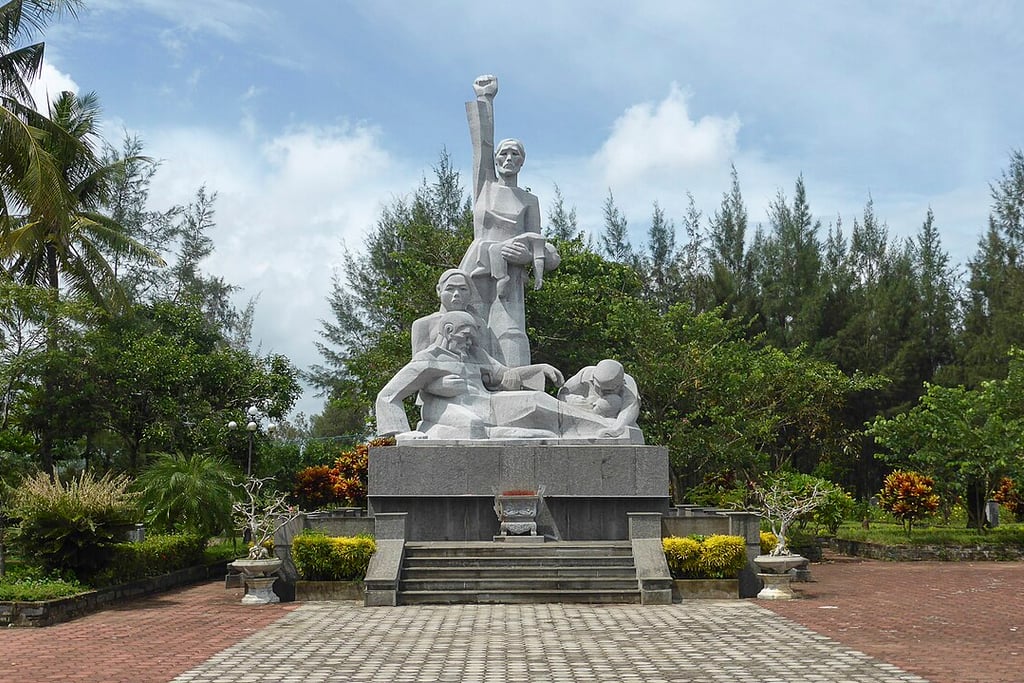
My son, Sean, turned 5 on 30 December 2008. On 31 December 2008, I was watching a program on Al Jazeera International entitled Revisiting My Lai Massacre. I had heard about the My Lai Massacre, but this was the first time I was watching a documentary about it. Indeed, this particular documentary was a special one. The program brought one of the US soldiers who had taken part in the massacre to My Lai village in Vietnam for the first time and confronted him with a victim/survivor. It was an intense program.
When I was watching this program, Sean came and curled up on my lap. Then he started asking endless questions about the program I was watching. I was telling him in the simplest possible manner that "that soldier had killed some people in that village a long time ago." Then Sean told me, "I hate war and I don't like war." I told him, "Neither do I, Sean, but there are many wars going on in this world, and many innocent people, including children, die." I could feel the confusion and disgust in this child's face. He then asked me, "Why did that soldier kill those people?" I told Sean, "He is saying that he was following orders from his commander." Sean followed up immediately, "What is an 'order'?" I then simplified my explanation, "His commander asked him to do that." Then Sean told me immediately, "But, Papa, he should think." I was surprised to hear this response. I asked Sean, "What do you mean?" Sean explained that he should think before he killed those people. I was surprised and felt also happy about my son's comment. I told him, "Yes, Sean, indeed he should have thought before he acted."
Later in the program, an attorney who had handled similar cases was interviewed. And surprisingly, his response basically was what Sean had told me about five minutes earlier. The attorney explained that when a soldier receives an order, the soldier needs to know whether it is a legal order or an illegal order. An order to kill innocent and unarmed civilians, including women and children, is an illegal order. If the soldiers thought and acted legally, then they should not have followed the order of their superiors.
This comment reminded me of a story my father had told me. My father was a soldier with the Sri Lanka Army for 22 years until he retired in 1978. This incident took place in the late 1950s when my father was a young soldier. This incident was related to a protest. There was a protest or a riot, and the movement of rioters/protesters was stopped by an army cordon. There was a face-off and a distance of about 100 meters between the two parties on a main road. The army had put up a banner stating, "If you move forward, you will be shot at." As I remember, this was related to the 1958 riots, during which Tamil civilians were violently attacked and killed by Sinhalese mobs. The group concerned here was a group of Sinhalese rioters, or rather a mob. After much damage had been done and many lives lost, the army was trying to control the situation. There was a state of emergency in effect.
During the stand-off, a prominent Sinhala politician and Member of Parliament named C. P. De Silva, who was the Leader of the House from 19 April 1956 to 5 December 1959, was seen talking to the mob, possibly trying to pacify the crowd and persuade them to disperse. The army could see the politician. My father was leading the group of soldiers. They were lying on the ground, pointing their guns at the mob. The guns were automatic weapons, loaded. There was no movement from the mob at that time towards the army cordon. My father could see the politician talking to the mob. But then suddenly there was an order from the captain in charge of that battalion to open fire. My father was supposed to lead the group to fire at the mob. But my father knew that this order was not right. In fact, he knew that if they opened fire, the politician would be one of the first to fall. He later told me that there was a conspiracy to get rid of this politician at that time. And this moment was a convenient way to accomplish that.
My father did not fire at the first command; thus, no others behind him fired as well. Then the command was repeated more loudly. I remember my father saying there was urgency and force in the second command to fire. He still did not fire, and neither did the others. Then the command was repeated for the third time, and that time the captain who gave the command kicked my father's boot from behind to urge him to lead the firing. He still did not obey the order. Then they saw the crowd, or the mob, slowly dispersing and retreating. It was obvious at that time that there was no need to fire at them. That was the end of the incident.
Later, an internal military inquiry was held, and my father was questioned as to why he did not obey a direct order from his commanding officer. My father, rather cleverly, did not explain the actual reasons, which were that his conscience did not allow him to fire at a group that did not pose any threat to them and that he also realised the possibility that the prominent politician was targeted during those circumstances. Rather, he explained that he did not fire because he thought that it was too much of a distance and that the crowd on the other side could not read the wording clearly on the warning banner hoisted by the army. He was not reprimanded. Recently, when the prominent politician passed away, my father related this story, saying that had he fired that day, this prominent politician would have been long gone.