Never stop writing

Dumped in Canto Grande
About three unforgettable days in Canto Grande, a poor settlement outside Lima, where families with almost nothing revealed the deepest forms of generosity, faith, sharing, and human dignity.
STORIES
Sanjeewa Liyanage
5/24/20204 min read
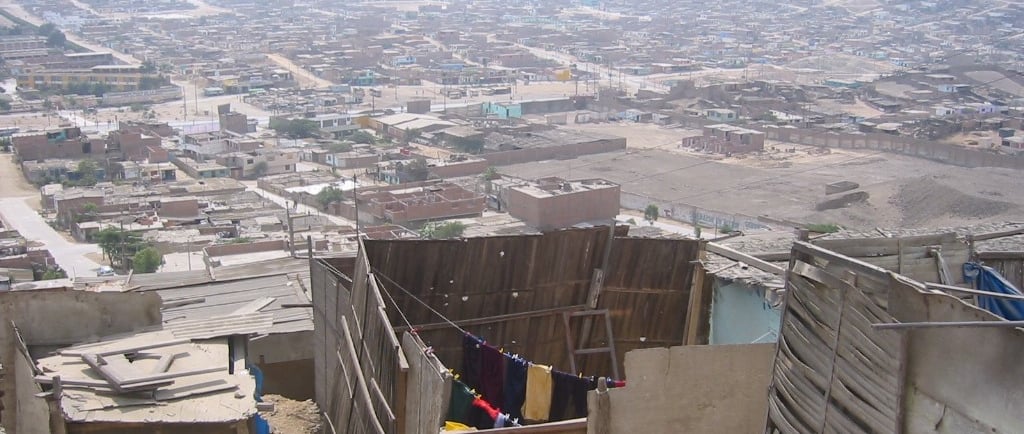
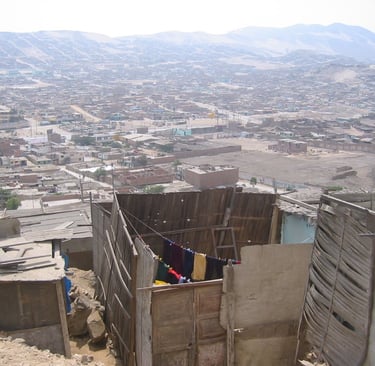
Canto Grande, or Great Song in Spanish, was, and unfortunately still is, a shantytown around Flores on the outskirts of Lima (Canto Grande, Distrito de Lima 15404, Peru) in around 1989. It is in the greater district of San Juan de Lurigancho (SJL), the most populated district in Lima, located in the area known as Cono Este. Its current population, in 2016, is over 800,000 people, meaning one out of ten people in Lima lives here. Ironically, the largest prisons in Peru are also located in this district.
We were given little to no information about Canto Grande. We were told that we were to spend three days in the slums on the outskirts of Lima. We were asked to pack only necessities. These pueblos jóvenes, or young towns, were a relatively new phenomenon. The story was that the peasants in the Andes in Peru were heading for Lima to find a better life or better security. A better life in terms of jobs and money, and security in terms of escaping the violence of Sendero Luminoso, or Shining Path, which organized itself, recruited youth, trained them, and ruled ruthlessly through terror in the mountainous areas.
Soon after we arrived there, we were allocated a family to live with. I do not remember the name of the household with whom I lived. I only remember that it was a family with three children, aged 8, 6, and 3. It was a slum house. And it was cold, especially at night. In that small slum house with practically one room, I was given a bed on one side. We could not speak to each other, or even if we spoke, we could not understand each other. So, we survived with sign language and sketches drawn on paper. There were a few of us from our group who were brought to Canto Grande, each spending time with a family.
Every evening, all our families gathered in a larger house and had a fiesta, with songs and dancing. They virtually had nothing, but brought whatever they had to that house in the evening. When they put together whatever they had, there was enough food for all of us. For the first time, I understood what it really meant by the “miracle” Jesus caused in the Bible, the multiplication of fishes and bread! These poor people did that miracle every time they gathered to celebrate life with music and dance. I came to realize that when people had nothing, they could make something out of nothing as well. That something does not require money, but whatever you could give or share. It was generosity and sharing at its best.
One Sunday, we had Holy Mass in a roofless church. The walls were about three feet tall, and the church was about the size of an average bedroom. There were simple chairs and benches arranged in a circle. There were about 20 of us in all. The priest led the service, but the lay people played an equally important part. It was the first time I saw an ordinary man from the slums giving the Sunday sermon instead of the priest. There was no traditional white host you get during Mass in a Catholic church. Instead, it was real bread we broke that day.
The whole of Canto Grande was dusty and dry. And there was no running water. In fact, people had to purchase water from a water bowser that came once a week. I do not know how they could afford anything there. There was no Red Cross or UNHCR there. They were left alone to help themselves. The only services they were getting were the volunteer services of the Catholic Church.
I knew that my host family had a few buckets of water. One morning, the man in the house called me to the back of their house and gave me one bucket full of water and showed me their shower. The shower was a small metal barrel with a metal tap fixed to it. The barrel was fixed above head level so that you could stand under the tap. I then realized that the man was telling me that it was my turn to take a shower. I had exactly one bucket of water, about seven liters. He poured the water into the barrel and went away. I, for the first time in my life, learned to take a shower with one bucket of water. In fact, after the shower, I was happy that there was still some water left in the barrel.
During breakfast, my host prepared some bread and whatever things they had for me. I was sitting alone at a small table, and the kids were watching me and staring at the food on the table. I could not eat like that. I had to use all my sign language skills to persuade the man and the woman in the house at least to let the kids come and share breakfast with me. They reluctantly allowed that. That was hospitality at its best: you give all that you have to your visitor while you and your kids have nothing to eat.
I left Canto Grande with a heavy heart. I knew very well that slums are everywhere, from Colombo to the “great” slums of Manila to Bombay. But humanity was at its best in these slums. I am sure there were other darker sides like drugs and crime in these slums too. But I did not get to witness anything of that sort when I was there.
Linda from Hong Kong, who was with us in Lima, and I often talk about our visit to Peru. And she and I have a resolution in our minds that one day, the two of us will go back to Lima. If I go back, the first place I want to go is Canto Grande.