Always write and never stop writing


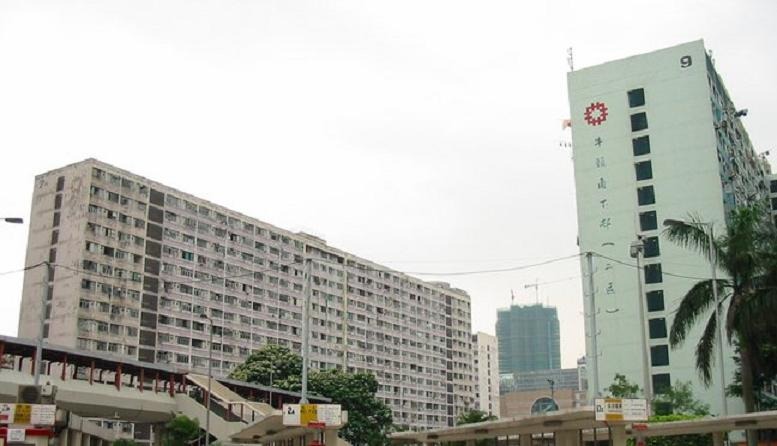
Lower Ngau Tau Kok Estate
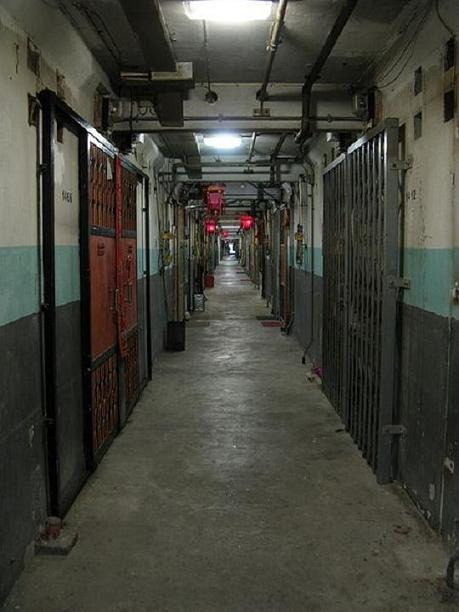
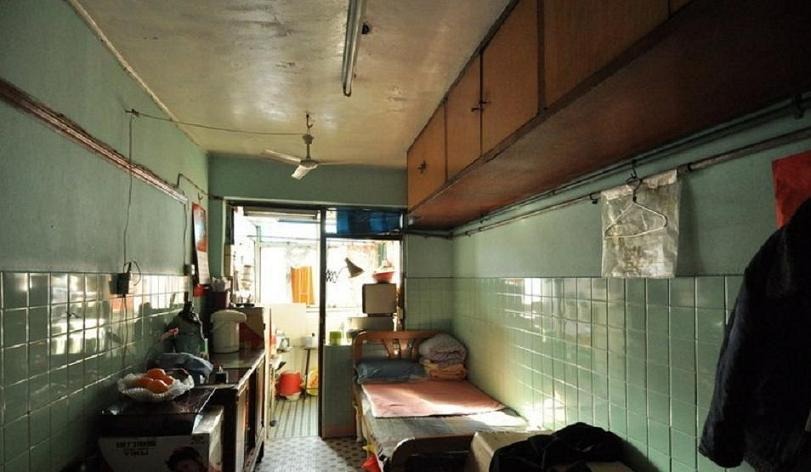
About my vivid memories of Lower Ngau Tau Kok estate I often passed by during my first days in Hong Kong in 1988 when living in nearby Amoy Garden in Ngau Tau Kok
HONG KONG DIARY
Sanjeewa Liyanage
5/24/20204 min temps de lecture
It was in the bustling Ngau Tau Kok district that we lived in 1988. On my second day in Hong Kong, that is, on 15 July, my colleague Zita told me that she was going to take me to the YCS office in Hong Kong. Zita was a tiny woman who spoke fast, walked fast, and did everything in a kind of hurry, as if she were late for something. She was filling me in so quickly that I was not getting half of what she was saying. I was more interested in observing the place I now called my new home, Hong Kong.
My first bus ride was from Ngau Tau Kok to Boundary Street on bus 1A towards Star Ferry. The bus was a double-decker KMB bus. There was no air-conditioning in buses in Hong Kong then. So, in the middle of summer, it was very hot and humid inside the bus. I have a faint memory of occasional double-decker buses in Colombo. But they had ceased to exist many years ago in Sri Lanka.
We got off at the bus stop next to St. Teresa’s Church along Prince Edward Road. She took me across Prince Edward Road through the footbridge towards the church. We then walked past the church and arrived at the ground floor of the Caritas Building situated on Boundary Street. The ground floor had the sign Caritas Lodge, and some modest accommodation was available on the upper floors, I think above the 8th floor.
We took the stairs to the 1st floor to take the elevator up to the 6th floor, where the offices of HKYCS and HKFCS (Federation of Catholic Students) were situated. The first person I was introduced to was Christina Yuen, who was the president of Hong Kong YCS during that year. I also met Father Joseph Fan, the chaplain of HKYCS. They both wore thick pairs of spectacles. In fact, many people I met in Hong Kong wore specs.
After a brief meeting to prepare for the forthcoming Asian Session, Zita and I returned to Ngau Tau Kok. Then I saw Lek sitting in front of a computer in one corner of the living room office. She gave me a quick orientation on how to use this computer. Put the 5 1/4-inch floppy disk labelled boot disk into drive A and switch on the computer.
After a few minutes, it would boot, and when the prompt appeared on C:, replace the boot disk with the disk labelled WordStar and type ws to start the WordStar word processor. Drive B was to store data. There was no hard disk! It was a bit like Greek to me. But I was keen to learn, and I learned quickly without trouble.
In the evening, Zita told me that she would like to take me to the IYCW office. She took me to the MTR, the underground metro of Hong Kong, for the first time. We started our journey from Kowloon Bay Station, passing Choi Hung, Diamond Hill, Wong Tai Sin, until Lok Fu, where we got off. The MTR really fascinated me, as I had never been on a metro or underground mass transit railway before.
Although the MTR was no longer underground from Kowloon Bay until Kwun Tong, in fact it was above ground on an elevated concrete railway bridge along that section, when you travelled towards Yau Ma Tei it soon went into dark tunnels right after Kowloon Bay. The MTR was so unique that I could see from one end of the train to the other when it was travelling on a straight line. And it was fascinating to see the train taking bends like a long metal electric worm.
After arriving in Lok Fu, Zita tried to orient me on how to get to the YCW office situated on a hill. After hiking for about five minutes, we arrived at an old colonial-style house made of granite blocks. There I met new friends like Soosai from South India, Samydorai from Singapore, and Stephan from Australia. Soosai was a dark man with a dark moustache who spoke with a thick South Indian Tamil accent. Samy was also of Tamil origin, but from Singapore, and had a beard and wore round spectacles.
Soon after we arrived, he and Zita engaged in an argument, and I then realized this Samy person was not easy to get along with. He was brash and irreverent. Stephan was a short and relatively quiet white man from Australia, who was always sitting in front of the computer. Soon it was dinner time, and we all, together with some Chinese YCW members, walked to the infamous Kowloon City to have dinner.
There was a kind of dai pai dong type of simple restaurant, where there was a circular table and stools around it. There was a big metal cup in the middle filled with plastic chopsticks. Someone ordered food, and it arrived in a few minutes. I do not remember exactly all the dishes, but one was prawns fried with eggs. For me, this was the first time I used chopsticks. They told me how to hold them, but I continuously failed to pick up any food between my chopsticks.
They were kind enough to serve some food onto my rice bowl, and I struggled and managed to eat using a plastic Chinese spoon. I enjoyed the food, but not the chopsticks. But I knew that if I had to survive in this new city, there was no way around learning how to use chopsticks.
Later on, around 1992 or 1993, I would go back to Ngau Tau Kok. This was when I started studying at City Polytechnic, now City University of Hong Kong (CPHK). Although I had been living in the area and walking past the Lower Ngau Tau Kok Estate, I had never been inside. At CPHK, I got to know a group of lifelong friends. I should write a different section about that very important period of my life.
One of them was Cliff, or Rix, who actually lived with his mother and brothers at the Ngau Tau Kok Estate. I would go there often, a few hours before handing in assignments, to work with Rix to prepare them, print them, have a quick dinner at the small shop which sold amazing yet simple cheung fun, steamed rice rolls in metal pots, and then go to Kowloon Bay MTR to head towards Kowloon Tong.