Always write and never stop writing




Opinion: Bad Policing is a Global Issue
About bad policing as a global problem, rooted in violence, impunity, poor training, political interference, and the urgent need for a humane, professional, and accountable police force.
REFLECTIONS
Sanjeewa Liyanage
6/7/20208 min temps de lecture
I am writing this at a time when there are protests around the world, starting with the incident in which George Floyd was killed by a policeman in the US. The protest is addressing racism in society. However, there is a bigger issue relating to policing itself.
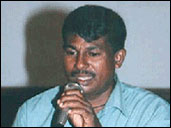
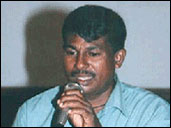
Police violence is something I grew up with. I witnessed it firsthand--I was the victim of one incident. But then, I heard hundreds of stories of police violence over the last 40 years. Some had fatal endings--like the case of Gerald Perera in Sri Lanka (https://www.bbc.com/sinhala/news/story/2004/11/041124_ahrckilling.shtml). When Gerald/Gerard narrated his brutal torture at the hands of police officers of Wattala Police Station to me in November 2003, I never knew he was going to be killed by the same officers because he was going to testify as a witness for the Government/prosecution. Due to public, local, and international concern over this case, the Attorney General’s Department did a rare thing—indict the police officers who tortured Gerard. The photo of him in the above BBC post was taken by me in 2003, and about a year later he was gunned down in broad daylight when he was going to work, a few days before he was to testify as a witness for the prosecution.
When I was growing up in Sri Lanka, I was directly or indirectly connected to police personnel. I had two uncles who were police officers. I got to know many police officers later on, some who were Deputy Inspector Generals (DIGs) of police and some who left the Sri Lanka Police (SLP) due to personal issues. I have friends and classmates who have been with the police. Currently, a longtime high school classmate is serving as a high-ranking officer of the SLP. A number of school classmates’ fathers were senior police officers.
Then, when I was living in Hong Kong for over 18 years, I used to assist the Hong Kong Police Force (HKPF), which I thought was comparatively a better police force in the whole of Asia up until the 2014 Umbrella Movement protests, and more seriously during last year (June 2019–present). In fact, I have visited over 20 police stations in Hong Kong, Kowloon, and the New Territories. I have been to interrogation rooms and sat with police personnel for hours while they were taking statements from the accused. I have witnessed the language they use to talk to the accused—it starts with the Cantonese term “f your mother” (fym), sounding like “delay-no-more,” and ends with the same term. For example, “fym/delay-lo-more, where were you last evening, fym/delay-lo-more.” This is not an exaggeration, but this is what I have witnessed at every police station, especially among those who were with the Criminal Investigation Department, wearing civilian clothes.
Whenever they used that term with an accused person I was assisting, I refused to proceed until they stopped using such language. This resulted in tension between them and me. They needed me more than I needed them. They resentfully complied. Often the accused who were subject to this type of demeaning and humiliating treatment were people from the lower strata of society in Hong Kong, for example hawkers. The affluent people always had their lawyers present when police were taking a statement. At least during those days (this is over 14 years ago), there was resentful respect for lawyers by the police. But when the lawyers were not around, they referred to them as puk-kai, another insulting term commonly used in Hong Kong.
Hong Kong’s historical evolution from a corruptly administered place to a clean and accountable society happened with the police. Those who are interested in this should read about the case of the corrupt British police officer Peter Godber. This single case resulted in the creation of the Independent Commission Against Corruption (ICAC), and civil service and, more importantly, police reforms. I recommend you read the contents linked to the above page on the ICAC to come to an understanding of how corrupt civil servants, especially the police, were then.
Let me get back to the police violence I referred to above. When my uncles were talking about the police, they often referred to the use of force as something very normal. “I took my belt (police belts were thick and strong) off and hammered the bugger (the accused) until he was begging me to stop,” was a common thing I heard from my uncles. Only later did I begin to understand that my uncles were beating up suspects to extract information. Why? Because there was a firm belief that they were quite sure that the person they arrested was the right one. Such belief was there then and is present now. Police always think they have the right suspects and that they are guilty.
Again, why beat up suspects? First, to teach them a lesson--a quick punishment. And second, to find out more information from them. We now know that that is, in fact, the definition of torture. But I did not know that then. And many police officers still do not know that. And most who know the definition of torture, and that it is illegal to do so, openly disregard it. This is because there are no sanctions in many police forces when they commit torture, unless it is caught on video and there is a public outcry. Most police beatings happen behind closed doors of a police cell, investigation room, illegal detention centre, or inside a police vehicle where there are no cameras or civilian witnesses. The only witnesses are the fellow police officers who take part in the beating or watch it without intervening.
One of the two uncles who used to work for the SLP was a criminal investigator. I do not think he took part in police beatings, as he was trained as a person to collect fingerprint evidence. I have seen his fingerprint-gathering equipment, that grey dust, brushes, and large photos of fingerprints he would examine to find a match--yes, in the 1970s they did this process manually, with no computer programs to process fingerprint matching. But that is exactly the point about investigations. Finding the truth through scientific evidence--which was painstaking but mostly led to the conviction of the right person for the crime he/she committed.
You do not need to go that far. I know from a number of police officers I have met from a number of countries that you can uncover a lot of useful information through a decent yet skillful interview. But how many police officers are trained in these interviewing techniques? What we see on TV or in movies, police beating up suspects in interview rooms, is not scientific interviewing. There may be many reasons for police not using interview techniques and resorting to violence to extract information. One is that they are simply not trained in those techniques. Many police learn from experience. They watch their senior officers resorting to these coercive methods, and they learn that on the job. There is always police camaraderie to protect and cover one another--often glorified through TV series or movies.
Another reason to resort to coercive methods is pressure from the top (police, political, or public) on a police force to resolve a case within a short period of time--“you have three days to find who did this” is the kind of order imposed on low-level police officers. In fact, the tragic case of Gerald/Gerard Perera in Sri Lanka was due to such pressure. There was a triple murder in the Hendala area (ironically where I grew up), and police were under pressure to find the murderers. They got a tip that the suspect’s name was Jeyaraj. When police were looking for Jeyaraj, someone misheard the name Jeyaraj as Gerard and thought police were looking for Gerard. They then tipped the police with the location of Gerard.
Gerard was picked up near his home by police in civilian clothes without any warrant card. Police blindfolded him, tied his hands, and brought him to the Wattala Police Station. The irony is that they did not even tell Gerard why they picked him up--he had absolutely no idea who picked him up and for what reason. There, Gerard was kept blindfolded, hung from a beam on the roof, and beaten with metal poles overnight. His joints were permanently damaged due to hanging. In the morning, the police who arrested Gerard learned that they had caught the wrong suspect. They then told Gerard, “Sorry mate, we got the wrong person,” and released him. Gerard was so severely beaten up that he had to be hospitalized and put on a life-support system at the intensive care unit for four days, after which he regained consciousness. He was later awarded compensation by the Supreme Court of Sri Lanka: https://www.lawnet.gov.lk/wp-content/uploads/2016/11/037-SLLR-SLLR-2003-1-SANJEEWA-ATTORNEY-AT-LAW-ON-BEHALF-OF-GERALD-MERVIN-PERERA-v.-SURENDRA-OFFI.pdf
This is just one such story. There are hundreds, if not thousands, of stories like this from Sri Lanka, India, and many other Asian and African countries. These incidents are not exceptional incidents, but frequent and widespread. They do not hit mainstream news because most of these people are not famous or affluent; they are the poor and socially marginalized sectors of society.
So, there is fundamentally something wrong in policing itself. There are a number of reasons for that. Here are a few: absence of proper/comprehensive police training; many hired to be police are those who cannot find jobs due to their low educational standards; when there is training, police training is focused on the use of force rather than scientific investigations; when they train on scientific methods of investigation, such training is not sufficient; when police use violence against civilians (even on camera), they are not held accountable by the justice system (what is happening in Hong Kong currently, for example); police complaint mechanisms are designed to defend the police force that actually investigates police—most police complaint mechanisms are conducted by the same police force that commits the violations; so-called independent police investigation mechanisms often lack independence, or do not have the power to take action against violating police officers--they can only make recommendations and publish reports.
As a result, police forces can function with impunity or, in other words, without proper checks and balances. Another quite amusing observation--when a police officer is found through internal investigations to have committed torture or abuse, they get what is called transfer-promotion--transferred to a new department/location with a promotion.
Such ability to function with impunity is reinforcing many police forces, most of the time, to take the law into their own hands. Police should be serving and protecting--not shoving and attacking (like the incident when Buffalo, NY police shoved a 75-year-old man to the ground, injuring his head).
My former colleague in Hong Kong, Basil Fernando, used to say, “Police have moved on from law enforcers to order enforcers.” This essentially means that in many developing countries in Asia and Africa, police are at the whims of politicians and the powerful in society. A politician can call a police station and ask them to do anything, and the police would often comply. Often such initiatives are illegal. I have also observed, at least in Sri Lanka, police would allow Buddhist monks to resort to any illegal act, like assaulting civilians, and do nothing. Extremist Buddhist monks have used their saffron robe as a protective shield to resort to racist and violent actions while police have become bystanders.
We often have come across the term riot police: police in so-called riot gear deployed on the streets, often during public demonstrations. Most of these demonstrations are peaceful gatherings. Then why deploy riot police during public rallies and demonstrations? In Hong Kong, confrontations on the part of young protesters with the police have been labelled riots. Essentially, these were demonstrations turned violent due to police using violent tactics (there are allegations in Hong Kong that some such violence was initially instigated by undercover police pretending to be demonstrators). Therefore, I think it is a mistake to deploy police in riot gear towards a peaceful gathering of people. Police often become provocateurs of violent acts, youth respond to such violence with counterviolence, and then police end up arresting young people/protesters for disturbing public order. This can be attributed to the vicious cycle of violence. Here, I am not in any way condoning violence by the demonstrating youth in Hong Kong. In fact, violent tactics deployed by young demonstrators in Hong Kong are gradually alienating them from the general population.
Due to all these issues, police in general have lost their credibility. They have become stooges of politicians. They have lost the trust and respect of people. They, like in Hong Kong, have begun to lose control. This way of policing will lose the original purpose of policing--maintaining peace and enforcing the law. Therefore, we need fundamental changes in the way policing is conducted. We need professional, competent, law-abiding, law-enforcing police. We need a compassionate, caring, mediating, communicating police force. We do not need police in riot gear who can only talk the language of violence through their batons, stun guns, or real guns. We need more community policing that can reason through dialogue. Basically, we need to have a paradigm shift in policing.
Tags: #badpolicing, #impunity, #policebrutality, #policeviolence, #torture, #unruleoflaw