Never stop writing

Lee Jae-eui: The Man Who Still Reads the Clocks of Gwangju
This is about my good friend and brother, Lee Jae-eui of Gwangju, and how our deep understanding, friendship, and shared commitment to preserving the spirit of Gwangju began and grew over the years.
PEOPLE
Sanjeewa Liyanage
6/7/202616 min read
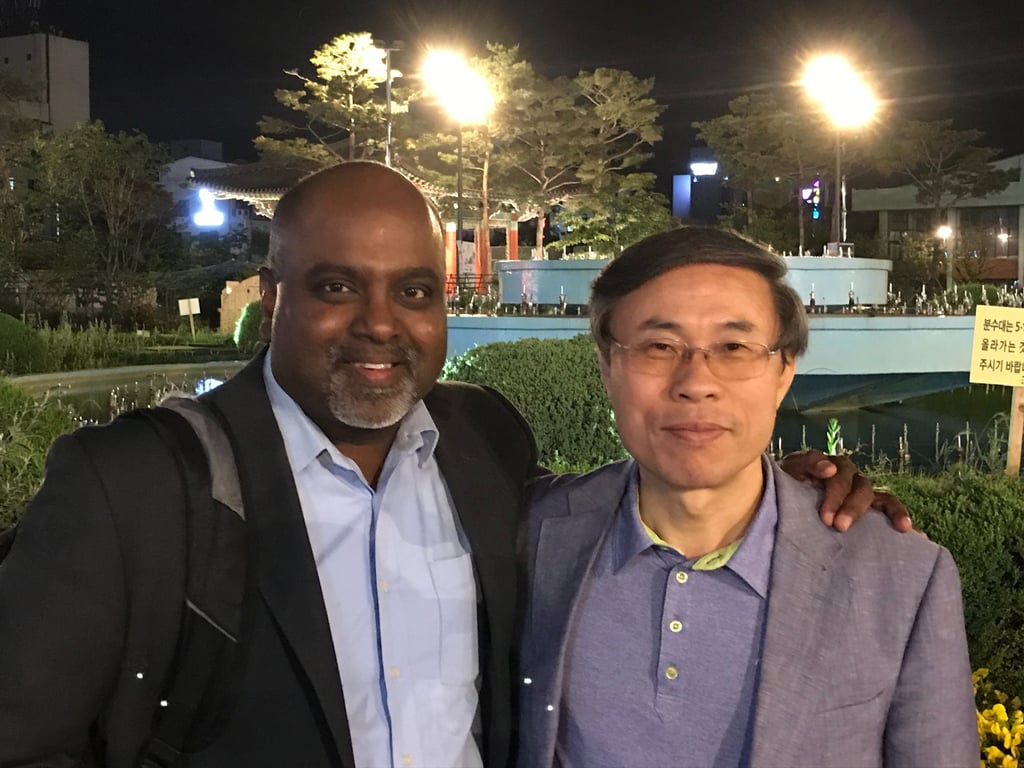
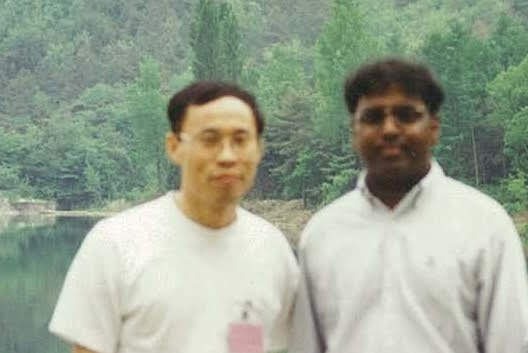
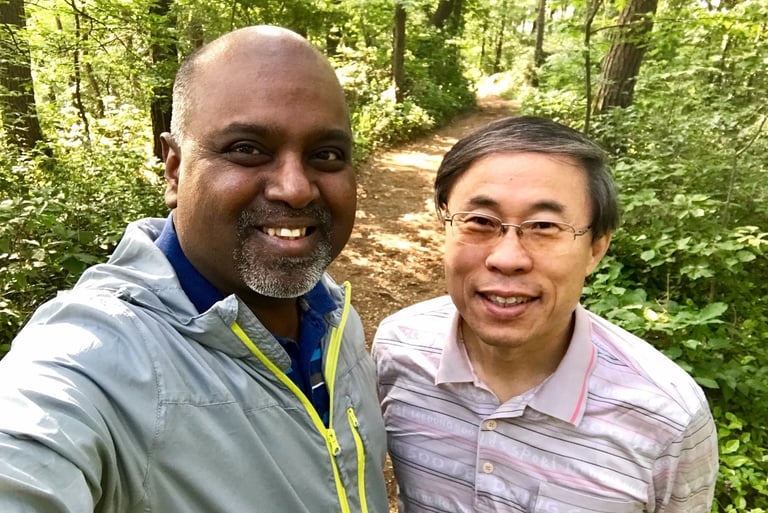
Lee Jae-eui, or Lee Jay as he calls himself in English, is an unusual friend. I met him in May 1996, during my first visit to Gwangju.
There are people who remember history because they once read it in a book. There are others who remember because history entered their own body, left marks there, and never left.
Lee Jae-eui belongs to the second kind.
Jae-eui was not a distant observer of May 1980. He was a participant and survivor of the Gwangju Uprising. He was a student activist. In the aftermath of the uprising, he was arrested, detained, and tortured inhumanely. That fact gives his later work a particular weight. He did not become a guardian of Gwangju’s memory as an academic exercise. He became one because the event demanded witnesses, and because silence had already done too much damage.
This is how Gwangju lives for me: not only through monuments, cemeteries, archives, and official ceremonies, but through people like Lee Jae-eui, who carry the city in their minds, hearts, speech, friendships, and responsibilities.
Kwangju Diary
Lee Jae-eui’s role in recording and preserving the truth of Gwangju began early and at great personal risk. He was one of the key figures behind writing Gwangju Diary, an underground account of the May 1980 uprising and massacre, written and circulated under the shadow of military dictatorship. Because the military government banned truthful accounts of Gwangju, publishing such a work was dangerous. To protect those involved and to give the book wider credibility, it appeared under the name of the famous writer Hwang Sok-yong, while Lee Jae-eui, also known as Lee Jay, remained one of the courageous hands behind the record.
Although the authorities raided the press and confiscated its printed copies, this had been anticipated. Many copies had already been leaked among university students, who photocopied and shared them widely. Gwangju Diary became one of the most inspirational underground publications for the student activists who led the June 1987 democratic protests. Gwangju was the fountain of energy and courage they needed to carry on.
I need to write a different post on Gwangju Diary itself. When a comprehensive revised version was published, I wrote the following review:
Twenty-five years ago, many people did not know about Gwangju (Kwangju) in South Korea. Often, when you said Gwangju, many would ask, “Are you talking about Guangzhou in China?” Many came to know about Gwangju through the 2017 Korean movie A Taxi Driver. Yet many still do not know that the Democratic Uprising in May 1980 in Gwangju was the key event that paved the way for democracy in South Korea. That event, or rather tragedy, was one of a kind in the history of Asian democracy, and probably one of the most underrated and relatively unknown historical milestones.
This book is about that incomparable event in the history of the democratization movement in Asia. Yes, most countries in Asia do not enjoy full democracy. Yes, some Asian countries or cities, such as Hong Kong, have stepped backward in relation to democratic development. But Korea is one place in Asia where there is strong democracy and greater freedom. That democracy and freedom came at the price of human lives and suffering over decades, especially since the 1980s. The Gwangju Uprising sparked the flame of democracy in South Korea. This book tells that bittersweet story of the courage and resilience of the Korean people, who fought and sacrificed much in order to yield something lasting.
I am privileged to have known the back story of the original Gwangju Diary. I am also privileged to have met persons who took part in that Uprising in May 1980. I was humbled by their amazing spirit of selflessness and hope during a seemingly hopeless era in the 1980s. A few individuals, especially the authors of Gwangju Diary, knew the importance of recording the historical events as accurately as possible. I learned how Lee Jae-Eui took life-and-death risks in collecting data and information with his fellow student activists in the early 1980s to come up with the first edition of the book. If he had been found writing the book then, he could have been arrested, tortured, and imprisoned. The legendary Hwang So-yong agreed to publish it under his name, knowing the risk of being arrested and imprisoned. Not only Lee, but he and his mates’ wives also took risks in the early 1980s when they typed the manuscripts secretly in their homes. Then, Gwangju Diary became an unparalleled publication of its time. It was probably the most widely circulated underground publication in the 1980s authored by Koreans. This book keeps the memories of an uprising alive. The subsequent June 1987 student and workers’ protests accelerated the process of bringing democracy and freedom to South Korea. But even after that, persons like Lee Jae-eui kept going — collecting evidence and recording it meticulously in a database while sitting in front of his computer, day and night, over decades. This second edition of Gwangju Diary is the result of such dedicated hard work.
Anyone who wants to know about Korean democracy and how it was achieved needs to read this book. Anyone who wants to learn about the spirit of that incredibly committed and selfless generation of youth from the 1980s, who relentlessly fought to restore democracy in South Korea, needs to read this book. Anyone who wants to be inspired to keep hope and fight against authoritarianism, dictatorship, draconian laws, and the suppression of human rights, particularly in many Asian countries, needs to read this book. This book is not just a special history lesson; it is a manual for hope. It also gives the prophetic message that one needs to keep fighting until one is free. Even in hopeless situations, one still needs to keep fighting. But another important message we learn from this book is the need to record historical events as accurately as possible and share them with a larger audience. We are all indebted to the authors of this book and, through them, to all those people in Gwangju who sacrificed their lives and fought hard for decades after the Uprising. This is their story.
Meeting Lee in 1996
By the time I met Lee in May 1996, his life had already been deeply shaped by Gwangju. I have four distinct memories of him from that first visit.
First, I remember him as someone who really wanted to tell the story of Kwangju to us, a group of youth and activists from Asia visiting the city for the first time. I use the spellings Kwangju and Gwangju interchangeably in this article to denote the same city. In 1996, it was called Kwangju, before the spelling of the city was changed to Gwangju. When I write about the mid and late 1990s, it is natural for me to use the spelling of the city from that time.
Lee had a receding hairline, wore a white T-shirt, and spoke using the microphone that was meant for the tour guide. He talked to us while the bus was moving, taking us to the historic old Mangwoldong Cemetery, where those killed in May 1980 had been put to rest. Lee was struggling with his limited English vocabulary, but he continued to tell us the key facts about the Kwangju Uprising.
I was struggling to understand what he was saying, not because of his limited English, but because of the complexity of the May 1980 events he was narrating. It was only later that I came to know that, in my opinion, he is the leading authority when it comes to factual details related to the Kwangju Uprising. Of course, he is the author of the famous Kwangju Diary, which was then infamous in the eyes of the military dictatorship. He would go on to write a revised and more comprehensive version of Kwangju Diary decades later and co-publish it with the famous Korean novelist Hwang Sok-yong.
Second, I remember something very personal. We were at the camp site for a week, learning about the history of the struggle for democracy in South Korea while also sharing our own relevant struggles from the rest of Asia. The accommodation at the camp was basic, just like a camp. There were rooms with two bunk beds, and four of us shared each room. There were also common bathrooms for men and women. For each meal, we went to the cafeteria.
That was where my embarrassing trouble began. The introduction of myself and my stomach to Korean food was disastrous. The food was prepared for locals. Later, I would learn that the food I was eating was made with some of the best and rarest ingredients in South Korea. Yes, in South Korea, where there are historical internal differences between regions — a regionalism that sharply drives differences of opinion, political and cultural — there is one fact they all agree on when it comes to food. The Cholla region, where Kwangju is the key city, has the best Korean food when it comes to dishes and ingredients. Even now, South Koreans come to Cholla to taste those special flavors, made with typical ingredients, herbs, and green leaves peculiar to Cholla.
Back to my story. The food in the camp did not go well with my stomach. I started having diarrhea. It was so unpleasant that whenever I went to the cafeteria, I hoped for different food, but that wish never came. We were served similar Korean food at each meal. I was struggling so much that when I saw and smelled the food, I lost my appetite. I started hating Korean food.
Somehow, I had to seek help. I told Lee about the issue I was facing. He listened carefully and told me not to worry. He asked me what I could eat. I wanted to tell him, “Anything but Korean food.” But I could not say that to his face, as it would have been terribly impolite. So I told him that if we could find some bread, that would be great.
So began our commute from the camp to the closest city, Tamyang. Lee would drive me in his car every day to the town, famous for its bamboo crafts, including the “bamboo wife,” a hollow cylindrical pillow-like object about a meter and a half long and 40 centimeters in diameter, made of bamboo. People would hug this object when they slept during hot summer days.
Then we found medicine to stop the diarrhea at a pharmacy and a bakery in town that had bread. Lee bought me a few baguettes each time we went there, and they became my survival food that week. During these drives, we talked and got to know each other. He told me about Korean culture, history, and many other stories. I think I learned much more about Korea and Kwangju from Lee than the other participants of the camp did.
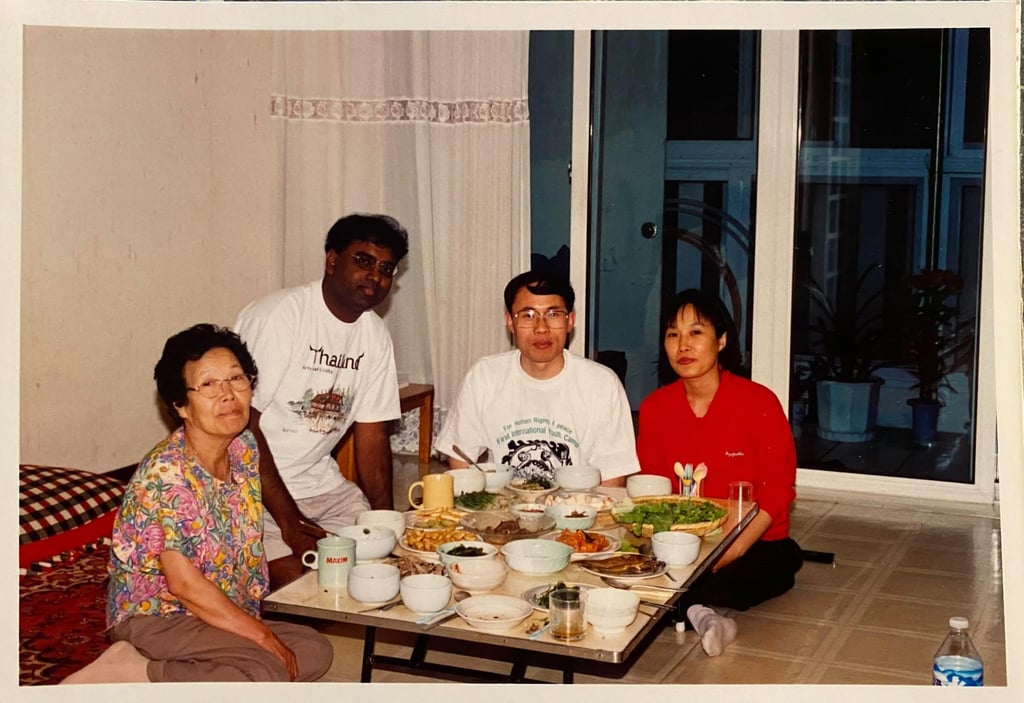
Third, I remember staying at Lee’s home after the camp ended. At the end of the camp, each participant was arranged to have a homestay with organizers of the camp, Kwangju Citizens’ Solidarity. Lee suggested that I come and stay at his place before I left Kwangju. I was happy to go to his home, as I had gotten to know him over the week through our bread and medicine drives back and forth from the camp.
I arrived at his apartment in Kwangju city. I was welcomed by his wife, two boys who were around 10 years old, and his mother-in-law. I was shown the place where I would sleep, not on a bunk bed, but on a comfortable, soft Korean mattress laid on the floor. He told me that the floor was heated, so I would not feel cold. Then he told me that his wife and mother-in-law had prepared dinner.
I was thinking, how am I going to survive this Korean food dinner? I hated Korean food. I could not even look at it.
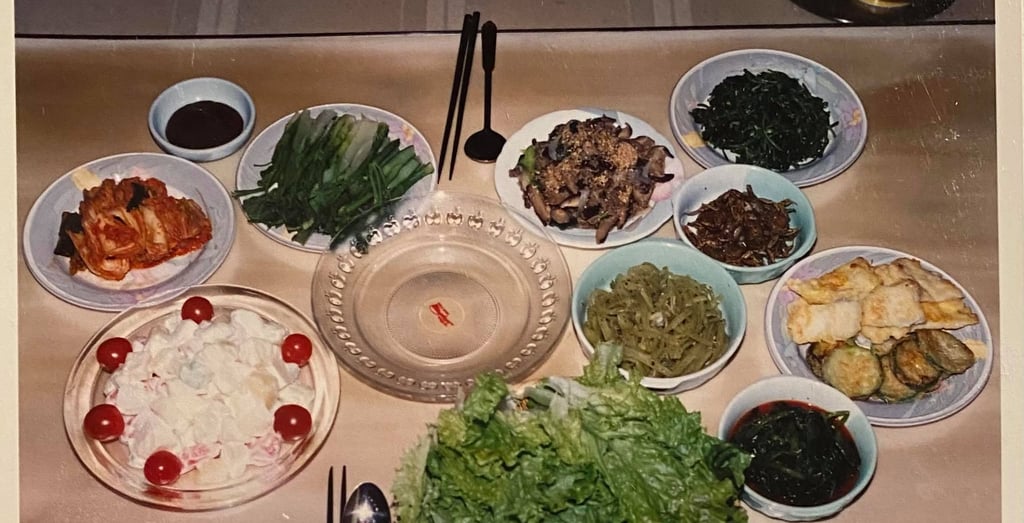
Dinner was prepared on a traditional low wooden table. We had to sit on cushions on the floor around the table. This was also a huge challenge for me. I was not used to sitting cross-legged on the floor and then bending forward to eat from a very low table. But that was not the main issue. It was the food.
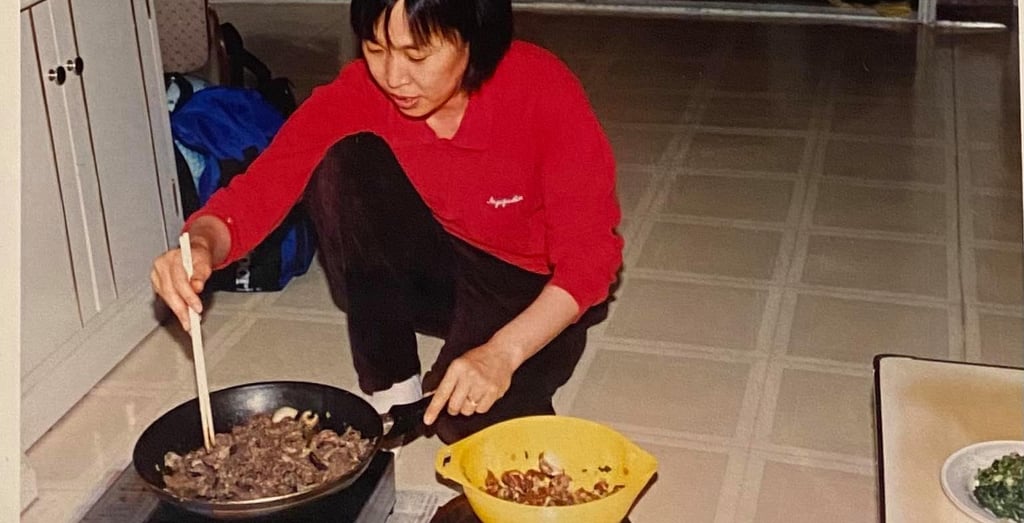
I still remember the colorful and fragrant dishes Mrs. Kim, Lee’s wife, prepared. Then I realized something different. They looked different and smelled different from the food in the camp cafeteria. She was making bulgogi, a soup, and a few other dishes. Lee asked me to try. I did. And I got the shock of my life.
The food tasted amazing. It was completely different from the Korean food I had seen and eaten the previous week. Suddenly, I got my appetite back. More importantly, my phobia of Korean food was instantly over. I loved the food I was eating. This was a transformative moment in my life when it came to Korean food. From that day onward, I loved Korean food. I thank Mrs. Kim, her mother, and Lee for making that happen. Whenever I meet Mrs. Kim, I remind her that I love Korean food because of her.
Fourth, I remember my discussion with Lee after that dinner at his place. We talked a lot about how to internationalize the Kwangju spirit. We suddenly realized that both of us were united and steadfast in that mission. We both wanted the Youth Camp in Kwangju to be the beginning of something, rather than an end.
Concretely, we talked about two things. One was to have a second Youth Camp for Human Rights, Peace and Democracy outside Korea. In fact, this event happened in Bangkok in 1997, right at the beginning of the Asian financial crisis. The other was how to link other struggling people’s movements to Kwangju. We agreed that we should try to bring victims and family members of victims of human rights violations, including enforced disappearances, to Kwangju. We did this with the help of the 5.18 Foundation in 1999.
More importantly, Lee embraced my proposal to hold the declaration of the Asian Human Rights Charter — A People’s Charter — in Kwangju. It was only an idea, but we thought it was a good idea and that we could try to make it work.
Now I should say one more thing about Lee. Lee is a very practical and pragmatic person. He is also very determined. Once his mind is set on something, he does all he can to achieve it. At the same time, if he thinks something is not doable, not realistic, or beyond his capacity, he declares that early and backs down. But he liked the idea of the Asian Charter.
At the Asian Human Rights Commission, I was knee-deep in the process of conducting consultations and helping create the final draft of the Charter. When I was in Kwangju, I found the ideal place to declare the Charter. Kwangju was ideal because it was a People’s Charter, and the Kwangju Uprising was a people’s uprising that paved the way for lasting democracy and the rule of law in South Korea.
When I went back to Hong Kong and told Basil Fernando, who was heading the AHRC, about this idea, he too agreed and gave his blessing to go ahead with the preparation. That evening discussion culminated in one of the largest gatherings of civil society organizations in Asia in May 1998, when the International Conference to Declare the Asian Human Rights Charter was held in Kwangju. Lee and I were the key organizers behind the scenes. There were many phone calls, faxes, and emails between KCS and AHRC, mostly between Lee and me. Lee represented KCS, and I represented AHRC.
That was how our friendship grew over the years from the mid-1990s to the late 1990s.
A Life of Research, Memory, and Trauma
Even after the publication of Gwangju Diary, Lee continued doing deep research to uncover new information and provide even greater clarity on the Kwangju Uprising. As a victim of torture, a person who has listened to hundreds of testimonies from family members and survivors of the Kwangju Uprising, and a person who has been writing about it all the time, Lee has had to live and relive the trauma of the Kwangju Uprising.
His trauma did not end with the lifting of martial law or the passing of decades. It still visits him in the night. He has written of waking from nightmares of the horrific scenes he witnessed in 1980, his underwear soaked with sweat. The past does not stay politely in the past for those who survived Gwangju. It returns through the body, through sleep, through fear, through the sudden sound of history trying to repeat itself.
In the mid-1990s, when Gwangju was beginning to speak more openly to the world, Jae-eui joined Soh Eugene, Dr. Yoon Jang-hyun, and others in forming Kwangju Citizens’ Solidarity. Their mission was not small. They wanted Gwangju to be known beyond Korea, not as a local tragedy in one country’s political past, but as an example of the resilience of people, and especially the people of Gwangju, who never gave up, even in the most trying times. Through this work, the memory of May 18 traveled outward, reaching activists, families of the disappeared, human rights defenders, and young people searching for courage.
Meeting the Boy’s Mother
The most revealing portrait of Jae-eui, however, comes not from a public stage, but from a rainy day in Gwangju.
I had learned that I had, in fact, met “the boy’s mother” before — Kim Gil-ja, the mother of Moon Jaehak, one of the youngest killed during the uprising and the boy later known to many through Han Kang’s Human Acts. Wanting to meet her again, I turned to Jae-eui.
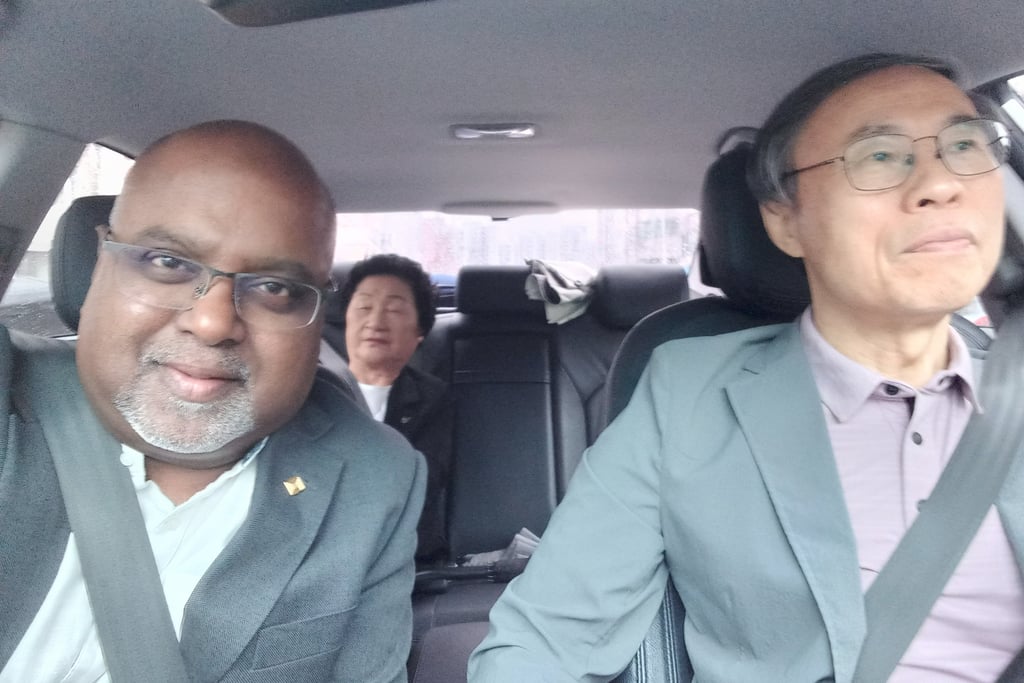
He made the impossible simple. He welcomed me into his home. His wife ironed a white shirt for my cemetery visit. Jae-eui advised that a suit jacket would be appropriate. Then we drove to pick up Kim Gil-ja.
On the way, Jae-eui reminded her that I was no stranger to Gwangju, that I had been coming for decades, and that I had met the mothers and fathers before. He spoke to her gently in Korean as we traveled toward the cemetery. In that car, he was not just my friend or host. He was a bridge — between languages, between grief and witness, between a mother and someone who had come from Switzerland to honor her son.
At Moon Jaehak’s grave, Kim Gil-ja spoke to her dead child. She told him that someone had come from Switzerland to see him. Jae-eui did not translate everything, and perhaps that was right. Some words between a mother and her son do not belong to the rest of us. But he translated enough for one sentence to remain: she had gone three times to bring him home, and he had refused, telling her to go home.
That is the sort of sentence history cannot file away neatly. It is too alive.
Later that evening, back at Jae-eui’s home, another side of him appeared: the investigator, the patient reader of evidence. While he tried to book my bus ticket to Incheon Airport, I browsed his bookshelf and found a grey hardbound book of Norman Thorpe’s photographs from Gwangju in May 1980. These were not ordinary images. Some had never been seen before. Some were taken inside the Provincial Hall on the morning of May 27, after the final crackdown.
Jae-eui was studying them closely. Not casually. Not sentimentally. He was looking for clocks.
Every visible clock in every photograph mattered. A wall clock, a wristwatch, a small detail in the background — each might help reconstruct the timeline of those last hours. This is where Lee Jae-eui’s work becomes almost sacred. He studies time itself, because time was once stolen, distorted, denied. The massacre had its own chronology, and he was still piecing it together.
Then came the revelation. In one of the photographs from inside the Provincial Hall, there were two young men lying dead. Guns nearby. Blood visible. Pieces of bread beside them. Jae-eui told me that one of those boys was Moon Jaehak.
The same boy whose mother we had visited that morning.
The same boy who had told his mother to go home.
The same boy who had become, through memory and literature, one of the faces of Gwangju’s stolen youth.
Jae-eui had already told Kim Gil-ja that the photograph existed. She had said she did not have the courage to look at it.
This is the burden Lee Jae-eui carries: not only to remember, but to know; not only to mourn, but to verify; not only to honor the dead, but to defend them from erasure, confusion, and historical laziness. He is a survivor, but not one who survived and stepped away. He stayed with the facts. He stayed with the mothers. He stayed with the photographs. He stayed with the clocks.
December 2024: Democracy Tested Again
That is why the events of December 2024 shook him so deeply.
When President Yoon Suk-yeol declared martial law, Jae-eui woke around 1:30 in the morning to a flood of KakaoTalk messages. News was spreading rapidly. People were confused, afraid, and unable to understand how martial law could be declared again in a democratized South Korea. For many, it was a political crisis. For Jae-eui, it was something more suffocating: the nightmare of 1980 threatening to step back into reality.
As he watched the events unfold, memories and the present collided. He remembered a time when student activists could be arrested at home under “preemptive detention” when martial law was declared. He even feared, if only briefly, that security personnel might storm into his house. This was not abstract anxiety. It was memory becoming physical again.
And yet, what he saw that night also revealed what Gwangju had taught South Korea.
Citizens rushed to the National Assembly. They blocked police and soldiers. They shouted at the soldiers, asking how martial law could suddenly be declared in South Korea in 2024, and whether the lessons of the Gwangju massacre had been forgotten. Lawmakers entered the National Assembly, barricaded the doors, and voted to invalidate the martial law declaration. Soldiers eventually withdrew. One soldier, Jae-eui noticed, bowed repeatedly to citizens and apologized.
In that moment, he saw something deeply moving: the blood shed in Gwangju had not been in vain. It had taught a younger generation what must never happen again.
And when democracy was tested again in December 2024, he stayed awake with the nation. He watched fear rise, then watched citizens push it back. He saw the shadow of martial law return, but he also saw the people refuse it. The night was frightening because it reminded him of what had happened before. It was also powerful because it showed that Gwangju had become part of South Korea’s democratic conscience.
To me, Lee Jae-eui is not merely a friend in Gwangju. He is family, a brother from another mother. He is the kind of person I can call not only for a place to stay, but for a passage into memory. When I planned to return to Gwangju from Seoul, I did not first think of hotels, arrangements, or formal visits. I thought of Jae-eui’s home. And, as always, he was happy to receive me.
To me, Lee Jae-eui does not appear as a loud hero. He appears as something rarer: a man who knows where to go, whom to call, what must be worn at a grave, what must be translated, what must remain untranslated, and why a clock in an old photograph may still matter forty-five years later.
Some people build monuments from stone. Lee Jae-eui builds them from memory, evidence, friendship, trauma, and time.