Never stop writing

The Torchlight at the Bus Stop
About a late-night bus ride home from Colombo to Hendala, where my father would wait silently at the dark bus stop with a torchlight, a memory that now defines for me his love, discipline, restlessness, and lifelong devotion to family.
STORIESPEOPLE
Sanjeewa Liyanage
6/10/20235 min read
Eymard, Thusitha, and I are standing in the dark for more than an hour at the Gamini Hall bus stop near my school, talking. We are talking about deep questions affecting our lives at that time, including love interests! We cannot see the future. Forget mobile phones, even our homes did not have telephones in those days. So there was no way to communicate urgently, except to find a house with a landline telephone, which was a luxury and a status symbol in those days, make a short call, and send a message.
Then my bus comes, the 107 Elakanda. I say goodbye to my friends and get in. Eymard and Thusitha could walk home or go by bicycle to Borella. Their homes were only about a five-minute walk away.
Most of the buses on route 107 were CTB buses, mostly Isuzu branded. I think the engine was Isuzu, but the body of the bus was locally made, perhaps at the Werahera CTB, now SLTB, depot. At those late hours, the buses had empty seats. Often, during those hours, the buses travelled through relatively deserted streets. As the bus moved forward, the thunderous sound of the engine pierced through the bus. I would sit and watch the streets and pavements, mostly empty at that late hour. In those days, there were no three-wheelers or tuk-tuks.
The bus would travel along empty McCallum Road, now D. R. Wijewardene Mawatha, towards the Lake House publishing building, passing behind the Fort Railway Station. As you approached Lake House, compared to the dark McCallum Road, the roads were brightly lit by street lamps. We were now in Fort. Then you pass the old red Cargills building, the YMBA, the clock tower near Wimaladharma Watch Company, and the entrance to the Colombo Port.
Then the bus would slow down along the narrow road between Colombo Fort and St. Anthony’s Church, Kochchikade. On the left side of the road was a high wall separating the road from the Colombo Port, and on the other side were many shops, including the Central Fish Market complex and wholesale shops, mostly run by the Tamil and Muslim communities. When you passed St. Anthony’s Church, you followed the ritual of making the sign of the cross. Then the bus would turn right along Jampettah Street, then right again onto George R. De Silva Road, and then left onto Jetawana Road at the Armour Street junction, now Sri Sumanatissa Mawatha.
Then the bus would pass the Buddhist temple on the left, the DIMO head office and factory, and enter Grandpass with the Sugathadasa Stadium on the left. Then the bus would travel towards Thotalanga, cross the Kelani River over the old bridge, and reach Nawaloka Junction in Peliyagoda. After crossing the Kelani River, the bus would move left and come to Wattala, passing Gemunu Palace cinema, where the lone elephant was hard at work, moving its trunk. Then it would pass Wattala Junction and travel along the new road built around the mid-1980s connecting Wattala and Hendala junction, reaching Hendala junction. From Hendala junction, it would turn left, passing Samudra cinema, with the post office on the right. This was the post office where I first opened a student bank account with a passbook, in which the balance was handwritten by the post office staff at the counter. Then the bus would continue along the narrow Hendala road, passing the Hendala Buddhist temple and Kerawalapitiya junction.
I would pull the string attached to the bell near the driver, indicating that someone wanted to get down at the next bus stop. If the bell did not ring, and if no one was waiting at the bus stop to get into the bus, the bus would not stop and would simply pass the halt! Then I would get down, and as soon as I got down, the conductor would pull the string again to ring the bell, indicating to the driver that the bus could now continue its journey.
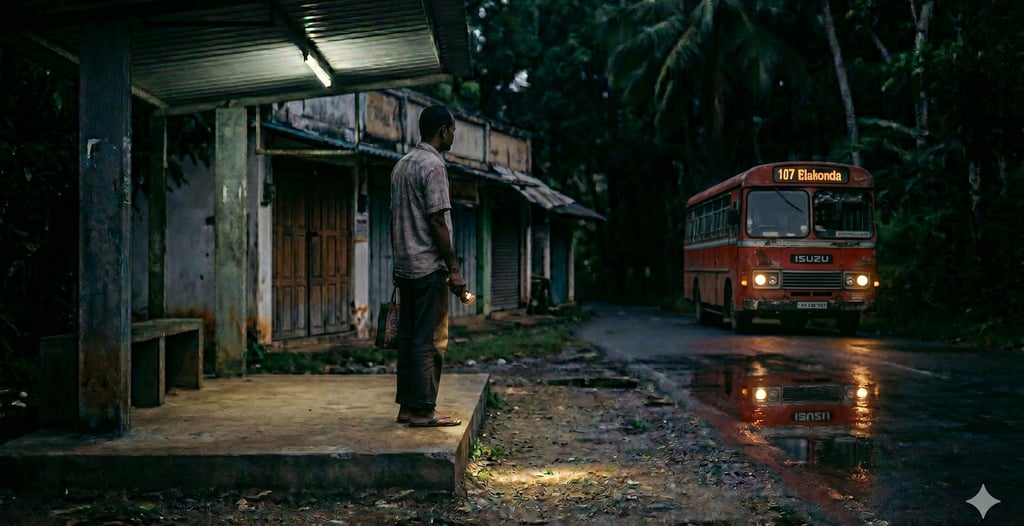
The bus would leave the stop. Most often, at that late hour, usually around 10 p.m. or later, I would be the only one getting down at that stop. Everything was dark. All the shops were closed. There were no streetlights even at the junction. Then, suddenly, a torchlight would switch on from across the road, from outside the closed shops opposite the bus halt, and point towards me. And when I saw that torchlight, I knew who it was. It was my father.
He had walked about one kilometer from my house to Nayakakanda junction and had waited there for me. How long had he been waiting for me? Sometimes, perhaps hours? Because I could never tell my family what time I would be returning home. Perhaps he had been there for hours! I would ask him how long he had been there. He never complained that I was late or that he had been there for hours. We would meet and walk home, talking. On the way home, he would tell me about something he had seen on the grass, perhaps something like a snake, or a new banana flower on a banana tree, or something related to the garden or the neighbourhood.
A few months ago, when my father passed away and was lying in a coffin, and when Thusitha and Eymard were at the funeral house, this experience came back to me again and again. I was late coming home by bus, and my father was waiting for me. I am not sure how many times this had repeated itself. And I was not a small child. I must have been about 18 or 19 then. It was completely safe to walk home, passing the church and the cemetery. But he was always there at the junction with his torchlight.
This is how I remember my father. He was a tireless man, always doing something: digging a hole to plant a tree, building a chicken pen, fixing a fence, drawing water and carrying buckets from the well about 200 meters away from our house, plucking leaves from the garden to make kalavam mallum or mixed green salad, cutting fish or meat in the kitchen to help my mother, fixing roof tiles, and if there was nothing else to do, scraping old paint from metal water buckets and systematically repainting them, first with a coat of anti-rust paint and then with a second layer.
Then there was another side. He would try to drag us into doing those jobs with him, sometimes waking us up early in the morning on weekends. On our weekends, we never really slept late!
So one big lesson we learned from our father was not to be lazy. He was not lazy, and he did not let us rest either. He made us help him with his restless work and duties! And many of these memories are from our home in Nayakakanda, Hendala. That is why I was determined that he should rest in the cemetery we had passed thousands of times during the decades we lived there. That was the place where all those collective memories belonged.
Those were bitter-sweet days. Bitter because we did not like being dragged into all those jobs with our father. Sweet because we had so much time to play with our neighbourhood friends, running around, playing elle, cricket, hora police, guti pandu, or ice bais.
බස් නැවතුමේ පන්දම් එළිය
2023/06/10 දින පළ කරන ලදී
Eymard, තුසිත සහ මම මගේ පාසල අසල ගාමිණී හෝල් බස් නැවතුම්පළේ පැයකට අධික කාලයක් කළුවරේ කතා කරමින් සිටිමු. අපි කතා කරන්නේ ආදර අවශ්යතා ඇතුළුව එදා අපේ ජීවිතයට බලපාන ගැඹුරු ප්රශ්න ගැන! අපට අතීතය පෙනෙන්නේ නැත. ජංගම දුරකථන ගැන අමතක කරන්න, අපේ ගෙවල්වල ඒ දවස්වල දුරකථන පවා තිබුණේ නැහැ. එබැවින්, ලෑන්ඩ්ලයින් දුරකථනයක් (ඒ දිනවල සුඛෝපභෝගී සහ තත්ත්ව සංකේතයක්) සහිත නිවසක් සොයා කෙටි ඇමතුමක් ලබා දී පණිවිඩයක් යැවීම හැර හදිසි සන්නිවේදනයක් කිරීමට ක්රමයක් නොමැත. එතකොට මගේ බස් එක එනවා, 107 ඇලකන්ද. මම මගේ මිතුරන්ට සමුදී ඇතුලට යන්නෙමි. Eymard සහ තුසිතට නිවසට පයින් යාමට හෝ ඔවුන්ගේ බයිසිකලයෙන් බොරැල්ලට යාමට හැකි විය-ඔවුන්ගේ නිවෙස්වලට විනාඩි 5ක පමණ දුරක් පයින් යා හැකිය.
107 බස් මාර්ගයේ බොහෝ දුරට Izuzu සන්නාමය සහිත CTB බස් රථ තිබුණි. මම හිතන්නේ එන්ජිම Izuzu නමුත් බස් රථයේ බඳ දේශීයව නිපදවා ඇත, සමහරවිට වේරහැර CTB (දැන් ලංගම) ඩිපෝවේ. ඒ පරක්කු වෙලාවල්වල බස්වල තිබුණේ හිස් ආසන. බොහෝ විට බස් රථ එම වේලාවන් තුළ සාපේක්ෂ රැකියා වීදි හරහා ධාවනය වේ. බසය ඉදිරියට යන විට එන්ජිමේ ගිගුරුම් හඬ බසය විනිවිද යයි. මම වාඩි වී වීදි සහ පදික වේදිකා නරඹමි, එම ප්රමාද පැයවලදී බොහෝ දුරට හිස්ව ඇත. ඒ දවස්වල ත්රීවීල්, ටුක් ටුක් තිබුණේ නැහැ. බස් රථය හිස් මැකලම් පාර (දැන් ඩී.ආර්. විජේවර්ධන මාවත) හරහා ලේක්හවුස් ප්රකාශන ගොඩනැඟිල්ල දෙසට ගමන් කරමින් කොටුව දුම්රියපොළ පිටුපසින් ගමන් කරයි. ඔබ ලේක්හවුස් වෙත ළඟා වන විට, අඳුරු මැකලම් පාරට සාපේක්ෂව, වීදි ලාම්පු වලින් මාර්ග දීප්තිමත් ලෙස ආලෝකමත් වේ. අපි දැන් ඉන්නේ කොටුවේ. එවිට ඔබ රතු පැරණි කාගිල්ස් ගොඩනැගිල්ල පසුකර යන්න. YMBA, සහ විමලධර්ම වොච් සමාගම අසල ඔරලෝසු කණුව සහ කොළඹ වරායට පිවිසීම. එවිට කොළඹ කොටුව සහ කොච්චිකඩේ ශාන්ත අන්තෝනි දේවස්ථානය අතර ඇති පටු මාර්ගය හරහා බස් රථයේ වේගය අඩුවේ. පාරේ වම් පසින් මාර්ගය සහ කොළඹ වරාය වෙන් කරන උස් තාප්පයක් වන අතර අනෙක් පැත්තෙන් මධ්යම මාළු වෙළඳ සංකීර්ණය සහ තොග වෙළඳසැල් ඇතුළු බොහෝ වෙළඳසැල් බොහෝ දුරට දෙමළ සහ මුස්ලිම් ප්රජාව විසින් පවත්වාගෙන යනු ලැබේ. ඔබ ශාන්ත අන්තෝනි දේවස්ථානය පසු කරන විට, ඔබ කුරුසියේ ලකුණ තැබීමේ චාරිත්රයට අනුකූල වන අතර, බසය ජම්පටා වීදිය දිගේ දකුණට හැරී, ඉන්පසු ජෝර්ජ් ආර් ද සිල්වා පාරෙන් දකුණට හැරී වම් පැත්තට හැරේ. ආමර් වීදිය (දැන් ශ්රී සුමනතිස්ස මාවත) හන්දියේ ජේතවන පාර. ඉන්පසු වම් පසින් ඇති බෞද්ධ විහාරය, ඩීමෝ ප්රධාන කාර්යාලය සහ කර්මාන්ත ශාලාව පසුකර ග්රෑන්ඩ්පාස්හි වම් පසින් සුගතදාස ක්රීඩාංගණයට පිවිසෙන්න. අනතුරුව තොටළඟ දෙසට ධාවනය වන බස් රථය පැරණි පාලම හරහා කැලණි ගඟ හරහා ගොස් පෑලියගොඩ නවලෝක හන්දියට ළඟා වේ. බසය කැලණි ගඟ පසුකර වමට ගමන් කරන අතර තනි අලියා දඬු සොලවන වෙහෙස මහන්සි වී වැඩ කරමින් වත්තලට පැමිණෙන්නේ ගැමුණු පැලස් සිනමාහලෙනි. ඉන්පසු වත්තල සහ හැඳල හන්දිය යා කරමින් 1980 දශකයේ මැද භාගයේදී පමණ ඉදිකළ නව මාර්ගය හරහා වත්තල හන්දිය පසුකර හැඳල හන්දියට ළඟාවේ. ඉන්පසු හැඳල හන්දියෙන් නමුත් සමුද්රා සිනමාහල පසුකර වමට හැරෙන්න වම් පසින් තැපැල් කන්තෝරුව දකුණට. කවුන්ටරයේ තැපැල් කාර්යාල කාර්ය මණ්ඩලය විසින් අත් අකුරින් ශේෂය සලකුණු කරන ලද පාස් පොතක් සහිත ශිෂ්ය බැංකු ගිණුමක් මා මුලින්ම ආරම්භ කළ තැපැල් කාර්යාලය මෙයයි. අනතුරුව බස් රථය හැඳල බෞද්ධ විහාරස්ථානය, කෙරවලපිටිය හන්දිය පසුකර හැඳල පටු පාර හරහා ගමන් කරයි.
ඊළඟ බස් නැවතුමෙන් යමෙකුට බැසීමට අවශ්ය බව හඟවමින් රියදුරු අසල සීනුවක සවි කර ඇති නූල මම අදින්නෙමි. නාද නොවන්නේ නම් සහ බසයට ඇතුළු වීමට කිසිවෙකු බස් නැවතුම්පොළේ රැඳී නොසිටින්නේ නම්, බස් රථය නවත්වන්නේ නැති අතර නැවතුම පසුකර ඉදිරියට යනු ඇත! ඊට පස්සේ මම බහිනවා, මම බහිනකොටම කොන්දොස්තර නූල අදිනවා නැවතත් සීනුව නාද කරන්න නූලෙන් බසයට දැන් ගමන යන්න පුළුවන් කියලා රියදුරුට අඟවනවා. බස් නැවතුමෙන් පිටත් වේ. බොහෝ විට, එම දවසේ ප්රමාද හෝරාවට ආසන්නව, බොහෝ විට රාත්රී 10ට පමණ හෝ ඊට පසුව නැවතුමෙන් බසින්නේ මම පමණි. ඔක්කොම කළුවරයි. සියලුම කඩ සාප්පු වසා ඇත. හන්දියේවත් වීදි ලාම්පු නැහැ. එතකොටම ටෝච් ලයිට් එකක් පත්තු වෙලා බස් හෝල්ට් එකට විරුද්ධ පාරෙන් එහා පැත්තේ වහලා තියෙන කඩවලට එලියේ ඉඳන් මගේ දිහාට දික් වෙනවා. අනික මේ ටෝච් ලයිට් එක දැක්කම මම දන්නවා ඒ කවුද කියලා. ඒ මගේ තාත්තා. ඔහු මගේ නිවසේ සිට කිලෝමීටරයක් පමණ පයින් ගොස් නායකකන්ද හන්දියට පැමිණ මා එනතුරු එහි රැඳී සිට ඇත. ඔහු මා එනතුරු කොපමණ කාලයක් බලා සිටියාද? සමහර විට පැය? මොකද මට කවදාවත් ගෙදර අයට කියන්න බැරි වුණා ආපහු එන වෙලාව කීයද කියලා. සමහරවිට ඔහු පැය ගණනක් එහි සිටියා විය හැකියි! මම ඔහුගෙන් කොපමණ වේලාවක් එහි සිටියා දැයි ඇසුවෙමි. මම ප්රමාද වූ බවට ඔහු කිසි විටෙකත් පැමිණිලි නොකළ අතර ඔහු පැය ගණනක් එහි සිට ඇත. අපි මුණගැසී කතාබස් කරමින් ගෙදර යමු. ගෙදර යන අතරමග ඔහු තණකොළ මත දුටු සර්පයෙකු වැනි යමක් හෝ කෙසෙල් ගසක අලුත් කෙසෙල් මලක් හෝ වත්තට හෝ අසල්වැසි ප්රදේශයට සම්බන්ධ දෙයක් මට කියයි. මම ප්රමාද වූ බවට ඔහු කිසි විටෙකත් පැමිණිලි නොකළ අතර ඔහු පැය ගණනක් එහි සිට ඇත. අපි මුණගැසී කතාබස් කරමින් ගෙදර යමු. ගෙදර යන අතරමග ඔහු තණකොළ මත දුටු සර්පයෙකු වැනි යමක් හෝ කෙසෙල් ගසක අලුත් කෙසෙල් මලක් හෝ වත්තට හෝ අසල්වැසි ප්රදේශයට සම්බන්ධ දෙයක් මට කියයි. මම ප්රමාද වූ බවට ඔහු කිසි විටෙකත් පැමිණිලි නොකළ අතර ඔහු පැය ගණනක් එහි සිට ඇත. අපි හමුවී කතාබස් කරමින් ගෙදර යමු. ගෙදර යන අතරමග ඔහු තණකොළ මත දුටු සර්පයෙකු වැනි යමක් හෝ කෙසෙල් ගසක අලුත් කෙසෙල් මලක් හෝ වත්තට හෝ අසල්වැසි ප්රදේශයට සම්බන්ධ දෙයක් මට කියයි.
මීට මාස කිහිපයකට පෙර මගේ පියා අභාවප්රාප්ත වී මිනී පෙට්ටියක වැතිර සිටින විට, තුසිත සහ ඊමාර්ඩ් මළ ගෙදර සිටින විට, මෙම අත්දැකීම නැවත නැවතත් මට සිහිපත් විය. මම බසයෙන් ගෙදර එන්න පරක්කු වුණා, මගේ තාත්තා මා එනතුරු බලා සිටියේය. මෙය කී වතාවක් පුනරාවර්තනය වී ඇත්දැයි මට විශ්වාස නැත. අනික මම පොඩි ළමයෙක් නෙවෙයි, එතකොට මට අවුරුදු 18ක් 19ක් විතර ඇති. පල්ලිය සහ සුසාන භූමිය පසුකර මගේ නිවසට ඇවිදින්න යන්න සම්පූර්ණයෙන්ම ආරක්ෂිතයි. ඒත් එයා නිතරම හන්දියේ හිටියේ එයාගේ ටෝච් එළියත් එක්ක.
මට මගේ තාත්තාව මතක් වෙන්නේ මෙහෙමයි. ඔහු වෙහෙස නොබලා මිනිසෙක් විය - සෑම විටම යමක් කරමින්, ගසක් සිටුවීමට වළක් හාරමින්, කුකුල් මස් පෑනක් සෑදීම, වැටක් සකස් කිරීම, වතුර ඇදීම සහ අපේ නිවසට මීටර් 200 ක් පමණ දුරින් පිහිටි ළිඳෙන් බාල්දි රැගෙන යාම, දළු නෙලීම. වත්ත "කලවම් මැල්ලුම්" හෝ මිශ්ර කොළ සලාදයක් සෑදීමට, මගේ මවට උදව් කිරීමට කුස්සියේ මාළු හෝ මස් කැපීම, වහලයේ උළු සවි කිරීම සහ කිසිවක් කිරීමට නොහැකි නම්, ලෝහ වතුර බාල්දිවලින් පැරණි තීන්ත ගලවා ක්රමානුකූලව නැවත තීන්ත ආලේප කිරීම , ප්රථමයෙන් ප්රති-ඔක්සිකාරක තීන්ත ආලේපනයක් සහ දෙවන ස්ථරයක් සමඟ. ඊට පස්සේ තවත් පැත්තක් තිබුණා. ඔහු අපව ඔහු සමඟ එම වැඩ කිරීමට ඇදගෙන යාමට උත්සාහ කරයි, සමහර විට සති අන්තයේ උදේ පාන්දර අපව අවදි කරයි - අපගේ සති අන්තයේ අපි කිසි විටෙකත් ප්රමාද වී නිදාගත්තේ නැත!
ඉතින් අපි අපේ තාත්තගෙන් ඉගෙනගත්ත ලොකු පාඩමක් තමයි කම්මැලි නොවී ඉන්න කියන එක! ඔහු කම්මැලි නොවූ අතර ඔහු අපට විවේක ගැනීමට ඉඩ දුන්නේ නැත, ඔහුගේ නොසන්සුන් වැඩ සහ රාජකාරි සඳහා අපට උදව් කළේය! ඒ වගේම මේ මතකයන් බොහොමයක් හැඳල නායකකන්ද අපේ ගෙදරින්. අප එහි ජීවත් වූ දශක ගණනාවක් පුරා දහස් වාරයක් අප පසුකර ගිය සුසාන භූමියේ ඔහු විවේක ගැනීමට මම අධිෂ්ඨාන කර ගත්තේ එබැවිනි. ඒ සියලු සාමූහික මතකයන් අප සතු වූ ස්ථානය එයයි. ඒ කටුක-මිහිරි දවස් - තාත්තා එක්ක ඒ වැඩවලට අපි අකමැති නිසාත්, පැණිරස නිසාත් අපිට අපේ අසල්වැසි යහළුවන් සමඟ සෙල්ලම් කරන්න, දුවන්න, එල්ලේ, ක්රිකට්, හොරා පොලිස්, ගුටිපාණ්ඩු හෝ අයිස් බයිස් සෙල්ලම් කරන්න තරම් කාලයක් තිබුණු නිසා.