Never stop writing

Topi Uncle
Memory of a special uncle when growing up
PEOPLE
Sanjeewa Liyanage
12/27/201210 min read
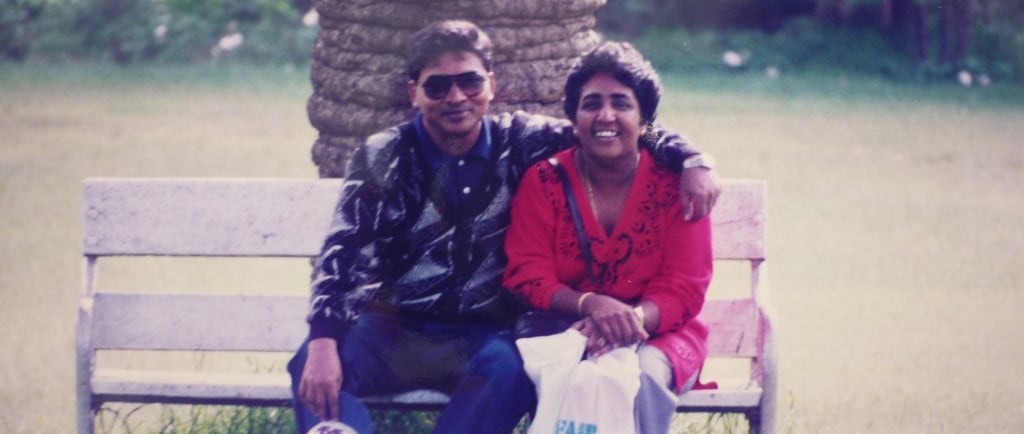
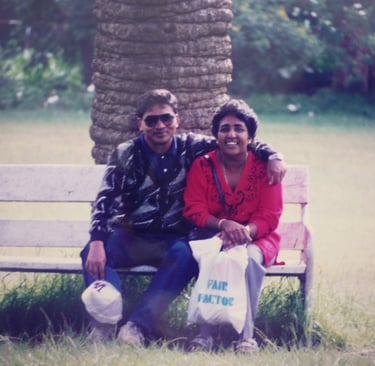
I was talking with my cousin Bunchi (or Oshani) a few weeks ago in Colombo. We talked about the old days and her late father, Mr. Sembukutti Aarachige Don Sunil Wilfred. He was known to many as Sunil. He was a loving father to Bunchi and her elder brother, Oshan. Oshan presently lives in Melbourne with his wife and two kids. He is a computer security expert. When I was chatting with Bunchi, she told me how her brother’s career choice had been influenced by their father. Then I started relating a few anecdotes about their father. Bunchi was surprised. She told me she never knew them. Actually, it was also the first time I learned that Oshan’s career direction had been influenced by their father. So I promised Bunchi that I would write some of these memories before they are lost. I hope these anecdotes would help cherish memories of their father and that their offspring would benefit from knowing the stories relating to their grandfather, who left this world rather prematurely.
To me, he was not Sunil or Wilfred Uncle. To me, he was Toffee Uncle. I believe I was about 2 years+ when he was dating my aunt, Kanthi Punchi. I vividly remember he brought toffees, or candy wrapped in colourful plastic wraps. He brought me toffees in large amounts, often in colourful small tin buckets, the size of large beer mugs or 1-liter yoghurt cups. So I made a connection between toffee and him. He was the uncle who was bringing me buckets of toffee. He should be called Toffee Uncle (or Topi Uncle). Thereafter, my sister, my brother, and my youngest cousin, Romesha, called him Topi Uncle.
The story goes that he met my aunt, Kanthi Punchi, in Madhu. As Catholic families, we all went on pilgrimage to Madhu Church near Vanni in the Northern Province every August to celebrate the feast of Our Lady of Madhu. Every time, this trip was such an adventure. Catholics would do this long journey to Madhu in lorries and buses and trains and set up tents--which we used to call vaadiya. Only a few could afford properly built holiday houses then. My father was a master in putting up tents. He had these large khaki colour tents he would use to set up the roof. Wooden sticks could be bought easily to set up perimeter poles around which clothes would be wrapped to provide a small hut-like tent. On the ground, we had straw mats. There was cooking, praying, eating, praying, and the whole thing was such an adventure for youngsters. I think in one of those years, our tent was set up closer to the police station in Madhu where Topi Uncle used to work. He saw Kanthi Punchi, and they fell in love (now, Bunchi needs to fill in the details on this part of the story; she has to interview her mother). As I remember, it was a long-distance love affair, as Topi Uncle was posted in Madhu and later in Mannar and/or Jaffna. So, there was a sort of pause in their relationship, or it was slow moving. But when Topi Uncle visited my mother’s home in Kolonnawa, he always brought me toffee! I was the only child, and I was a toddler. So I was the lucky one, who surely enjoyed those toffees all by myself.
Topi Uncle came from Pamunugama, a traditional fishing village by the beach off Ja-Ela. He also came from a Catholic family. He was employed by the Sri Lanka Police Force. And his last years in the police were with the CID, or the Criminal Investigation Department. He was actually doing criminal investigations. He specialized in fingerprinting crime scenes. So, to all of you who watch CSI, CSI this and CSI that: I had seen Topi Uncle doing it when I was a child, and he related stories, real stories, which made my jaw drop!
Topi Uncle was a handsome fellow. Especially when he was young, in Pamunugama, he had been referred to as Jambu Sunil, mainly by young girls.
He taught me many things, including basic martial arts. I saw him bringing home his CSI fingerprint kit, with silver color powder, various brushes, magnifying glasses, scales, etc. He asked me to touch a glass and asked me to show my fingerprints on it. I could not clearly show them. Then he would sprinkle that silver powder on the glass and gently brush it off with soft brushes to reveal my fingerprints, clearly visible on the glass. He would then ask me to peer through a large magnifying glass at my fingerprint. Is that my fingerprint? So large? I could see the pattern of lines on my finger on the glass. I could even count those lines (though it would take some time). It was magic. Absolute magic, to me. But it was actually pure science and true crime investigation techniques. And in those days there were no computers to match fingerprints. He would also bring large, A4-size plastic sheets on which we could see an enlarged print of a thumb or another finger. He would then analyze that print manually with another print held by CID files in the Police Department to see whether they matched or not. This analysis was done line by line on each print, making remarks and notes. They were to be presented at court hearings as evidence later. It was laborious work. But it was true police work. Today, when I hear about routine and widespread torture by the police in Sri Lanka to extract confessions out of suspects, I remember Topi Uncle doing hard investigative and analytical real police work to uncover crimes. Topi Uncle did not go to university to learn that! He learned through his work and possibly attended specialized courses. Today, that level of commitment and discipline has been lost by the police in Sri Lanka. The only investigation method they know is torture! Sadly. After writing the first part of this blog, I shared it with Oshan and Bunchi. And Oshan then directed me to his blog about his father, Topi Uncle, in which he describes how, as a son, he saw his father's work and how his father had inspired him.
Postmortems in the jungle
Among the many duties Topi Uncle did during his criminal investigation work was to be a police witness at postmortem inquiries. I am not sure whether this was a requirement or a circumstantial occurrence. He explained in numerous stories when he had to accompany the forensic pathologist to very remote parts of the country, often rural villages at the edge of jungles. I remember one such story vividly. It was in a rural village. Topi Uncle and the doctor reached the rural village where a homicide had taken place. A person had been killed by a blow to the head. They reached this place after taking a bus and later walking a few kilometers through a footpath where no vehicle could pass through. By the time they reached the village, the sun was setting, and it was getting dark. There was no electricity. They had a torchlight, but the batteries had gotten weaker. After reaching the crime scene where the body was, the doctor asked the villagers to set up a wooden stall. He then asked them to prepare two kerosene lamps, which we called kuppi laampuwa (a very basic homemade kerosene lamp). He then tied the lamps to the poles attached to the stall. He then laid polythene or a thin rubber sheet he brought along on the wooden stall and quickly changed into his greenish overcoat. He then wore his surgical mask made of cloth and got his tools, such as scalpels, ready. Topi Uncle was watching anxiously. The doctor then asked the villagers to cover the area with a few large white cloths they had bought for the funeral procession of the deceased. He asked them not to disturb him until he finished examining the body. He told Topi Uncle to stay. He gave him a notepad and a pencil and asked him to write what he was going to tell him when he started examining the body. He also told Topi Uncle to hold the torchlight when he needed it. He then started to cut and remove the skin around the hairline of the body. He skillfully removed the top part of the skull by using a small chisel-type instrument and a small hammer. He then examined the skull, which had a fracture due to a blow to the head. He then asked Topi Uncle to wear an extra pair of gloves he had in his bag and gave the part of the removed skull (looking like a mini helmet) to Topi Uncle and asked him to hold it. Topi Uncle was in shock. He was this young policeman and had never seen something like this. First, he was not ready for this postmortem at all. He thought his job was to accompany the doctor to the crime scene and take down any notes and gather evidence. The postmortem in a makeshift, open-roof cloth hut with kerosene lamps was a shocker. But the doctor was the boss of the moment. He had to assist the doctor. He reluctantly held the part of the skull. Then the doctor carefully removed the brain and put it inside the bowl-like skull, which was now being held by Topi Uncle. Then he asked Topi Uncle to hold the brain and the skull closer to the kerosene lamp. The doctor discovered the part of the brain that had been affected by the blow through a broken part of the skull. He took the scalpel and cut a small part of the brain where he thought it was affected by the blow. He took this part of the brain near the kerosene lamp and examined it. He then asked Topi Uncle to put the partial skull and the brain in it on the wooden stall. He asked Topi Uncle to remove his gloves and take the notepad. He started dictating his report, which Topi Uncle had to write under the kerosene lamp. He learned a lot of medical terms related to human anatomy through this exercise. After examining the body, the doctor put everything back in place and sewed the skin intact. Topi Uncle was relieved. It was a shocking experience. After the doctor completed his report under the kerosene lamp, they had to make their way back to the main road to catch the last bus back. The torchlight had used up all the battery power, and they had to use one of the kerosene lamps to find their way back to the bus stop. Some villagers accompanied them, making sure that they did not step on cobras or vipers often active around these footpaths or adi paara.
Topi Uncle told these stories in the most interesting way, making the listeners’ jaws drop in suspense. He had his way of making the stories interesting. For me, these stories were very special. No one in my class had ever heard such stories. When I tried telling them these stories, they thought I was crazy and making them up; they simply could not believe them. It was too incredible for them. But I knew it was true. So I took a lot of pleasure in listening to these real-life stories.
Investigating crime scenes—how the thieves open wardrobe (almirah) doors
Another thing Topi Uncle told me was about how police investigations were conducted based on the usual behavior of common thieves. When Topi Uncle went to a burgled home to investigate, he would not go and find fingerprints on every little object. Well, at some scenes he would do that if he did not find any lead. But often he would go for places where he was likely to find prints quite easily. For example, if a wardrobe, or an almirah as we call it in Sri Lanka, was broken into, he would not try to fingerprint the knob or handle of the almirah first. He would first spread his silver dust on the top area of the almirah door. Why? Often burglars carry out burglaries at night when the people are sleeping in the house. So they do not need to break the lock, as when people are in, almirahs are unlocked. But they know the creaking sounds coming out of almirah doors when they open them. One way to avoid the sound of this creaking sound is to either pull the almirah door downward or lift it up. They do this often by having a tight grip on the top edge of the almirah door, their palm pressed hard to the outer side of the door and fingers pressing hard on the inside of the door. So, it is likely to find the print in these areas of the almirah door, and since common burglars need to have a stronger grip on the top edge of the door, it is likely to have clearer prints. This was just one example. Often, investigators began their investigations by following the common behavior of thieves or burglars.
Sketching
Topi Uncle was also a talented artist. He taught me how to copy an image with identical features. It was all done in pencil. It was painstaking, though. He would take a passport-size photo and start drawing parallel lines on it with pencil, with equal space between them. These parallel lines had to be as close as possible to each other to get a better result. After he drew the vertical lines, he would draw horizontal lines with the same space between them. After that, each line was numbered. Thereafter, a large piece of white paper was taken, and he would draw an equal number of horizontal and vertical lines and number them accordingly. Now each vertical and horizontal line of the large paper corresponded to a line on the smaller photograph. Thereafter, you would try to sketch the image using lines. Once the larger image was done, he would do all the shading using the pencil. After the image was done, he would delete all the horizontal and vertical lines: You had a perfectly enlarged sketch of the small photograph. Through this, I learned how patient and meticulous you have to be to achieve perfect results. Possibly this attention to detail had been taught to him during his criminal investigation training. Once again, a trained police officer.
Sense of humour
Topi Uncle was also a person with a tremendous sense of humour. He at times would make my aunt, Kaanthi Punchi, angry or upset due to his jokes alluding to certain behavior of my aunt. He also had so many funny stories. One of those stories is about dogs.
When a dog meets another dog, why does he always smell the balls of the other dog?
Now the question arouses so much interest. You always see this behavior among dogs. This is how it all started, according to Topi Uncle. Once upon a time, all dogs lived in a dog town. They had to commute to another town for work. While walking and running and working, they found their balls, often hanging down, quite an inconvenience. Then one of them came up with a brilliant idea. This dog found a tree in the town with a lot of branches. Why don’t we hang our balls on the tree before we leave for work, and when we return, we can get them back? And it worked. So every morning, all the dogs would hang their balls on the branches of the tree before leaving for work. There was no problem at all, as they could easily identify their own balls through their unique colour and size. But disaster would strike one day. Some town dog had burned rubbish and dry leaves near the tree, and the tree caught fire. All the balls were beginning to get burned. By the time other dogs in the town put out the fire, all the balls on the tree were half-burned beyond recognition. They all looked the same charcoal color! When the working dogs returned, surprise, confusion, and frustration awaited them. They could not identify their own balls. Then they resorted to wearing whatever balls they could fetch from the tree. From that day onwards, dogs were having balls not belonging to them. That is why when a dog meets another dog, the first thing they do is check the balls out, as a habit, to see whether that dog is wearing his balls!